Parent organization/Ice Athletes·National Stay Cool Day

Championing safer play
for athletes of
every age.

The Player Safety Council is a standards and credentialing body for athlete safety. It writes the protocols, credentials the coaches and staff who use them, and runs the public campaigns that make them impossible to ignore. Across every sport, and every hazard that puts an athlete in a hospital — head injury, cardiac arrest, heat illness, overuse, and unsafe conditions of play.

What the Council covers

  • 01Head and brain injuryHelmets, headgear and concussion
  • 02Sudden cardiac arrestAEDs, CPR and the first response
  • 03Exertional heat illnessThe cooling standard, published in full
  • 04Workload and overuseGrowing bodies and year-round seasons
  • 05Conditions of playLightning, air quality, fields and gear
  • 06Emergency preparednessThe Emergency Action Plan, rehearsed

Together, we are building a safer future for athletes of every age.

Every sport
Contact and non-contact
Every age
Youth leagues to collegiate
Six domains
The hazards that hospitalize athletes
2.0 CEU
Credit recognized by NCAA · NATA · NFHS
The CouncilI

A standards body,
not a campaign
with a logo.

Most catastrophic injuries in sport are not freak accidents. They are known risks with known answers — a helmet that fits and is certified, an AED someone can reach in seconds, a head injury taken seriously the first time, a heat protocol the staff has rehearsed. What decides the outcome is almost never the equipment budget. It is whether the adults on site were prepared before the whistle.

How the Council is organized →
  • 01

    Sets the standards

    The Council maintains plain-language safety protocols for the situations that actually put athletes in hospitals — head impact, cardiac collapse, heat illness, overuse, and unsafe conditions of play. Each is reviewed by a Medical Advisory Board before it is taught, and each is written to be followed by the adult who is already on the field.

    Standards
  • 02

    Credentials the adults on site

    A protocol protects nobody until the coach, trainer and athletic director have been trained and examined on it. Player Safety Council credit sits alongside NCAA, NATA and NFHS credit on the certification its education arm delivers, and every credential carries a validation code a school can check.

    Credentials
  • 03

    Makes safety impossible to ignore

    Standards do nothing while they sit in a binder. The Council runs national public campaigns that put safety in front of entire athletic communities on the same afternoon — parents, athletes, boosters and administrators together, not just the training staff.

    Campaigns
The safety agendaII

Six hazards. One standard of preparation.

Athlete safety is not a single subject. These are the areas where preparation, not luck, decides how an afternoon ends — and the Council holds a standard in each of them.
01Council standard

Head and brain injury

Helmets, headgear and concussion

Protective headgear only works when it is the certified model for the sport, fitted to the athlete, maintained through the season and retired or reconditioned on schedule. And no helmet prevents a concussion — so the standard also covers what happens after an impact: an athlete removed from play, evaluated, and never returned the same day on a hunch.

  • Certified, correctly fitted headgear — checked, not assumed
  • Reconditioning and retirement on a documented schedule
  • Remove from play on suspicion, not on certainty
  • A stepwise, supervised return before contact resumes
02Council standard

Sudden cardiac arrest

AEDs, CPR and the first response

Cardiac arrest in a young athlete is survivable, and survival is decided in the first minutes by whoever is standing there. That makes it a preparation problem: an AED on site, its location known to everyone rather than locked in an office, staff trained in CPR, and a rehearsed answer to who runs for the device while someone else starts compressions.

  • An AED on site, unlocked and signposted
  • Staff current on CPR and AED use
  • Collapse treated as cardiac until proven otherwise
  • Response roles assigned before the season, not during it
03Published standard

Exertional heat illness

The cooling standard, published in full

The area where the Council publishes its most detailed protocol, taught and examined through Ice Athletes. Recognition above a core temperature of 105°F, whole-body cold water immersion where the athlete fell, and no transport until roughly 102°F. Cool first, transport second.

  • Core temperature is the only number that decides
  • Whole-body immersion on site, in whatever container is there
  • Cool to about 102°F before the athlete leaves the field
  • WBGT, not the air temperature on a phone, sets activity limits
Read the standard →
04Council standard

Workload and overuse

Growing bodies and year-round seasons

A growing athlete is not a small professional. Overuse injury is the predictable result of year-round single-sport play with no offseason and no rest days — and unlike a collision, it is entirely a scheduling decision made by adults. The standard here is written for coaches and parents, because they are the ones holding the calendar.

  • Rest days and a real offseason, written into the schedule
  • Sport-specific volume limits observed, including in practice
  • Growth-plate vulnerability treated as its own risk
  • Pain reported without a cost to playing time
05Council standard

Conditions of play

Lightning, air quality, fields and gear

Some of the most preventable harm has nothing to do with the sport itself: lightning over an open field, smoke or air quality nobody checked, a playing surface with holes in it, goals that are not anchored, gear that failed inspection last year. Each of these has a clear threshold at which play stops, and the value of a threshold is that it is decided in advance rather than argued about in the moment.

  • When thunder roars, go indoors — and a published return-to-play delay
  • Air quality and heat checked before, not during, a session
  • Documented pre-season inspection of surfaces and anchored equipment
  • Water and shade available as a condition of holding the session
06Council standard

Emergency preparedness

The Emergency Action Plan, rehearsed

Every protocol above ends in the same place: a venue-specific Emergency Action Plan that names people, not roles in the abstract. Who recognizes it, who calls 911 and what they say, who fetches the AED or fills the tub, who meets the ambulance and where it parks, who documents the times. A plan nobody has walked through is a document, not a plan.

  • One plan per venue, because the ambulance entrance differs
  • Names attached to every assignment before the first session
  • Rehearsed with the staff who would actually be there
  • Reviewed after any incident and at the start of every season
Across the boardIII

Every sport.

  • Football
  • Soccer
  • Basketball
  • Baseball & softball
  • Hockey
  • Lacrosse
  • Wrestling
  • Track & field
  • Cross country
  • Cheer & dance
  • Volleyball
  • Swimming & diving
  • Tennis
  • Rowing
  • Rugby
  • Marching band & spirit

The hazards differ by sport; the standard of preparation does not. A rec-league volunteer and a collegiate athletic department need the same four things in place — trained adults, working equipment, a published threshold for stopping, and a plan somebody has rehearsed.

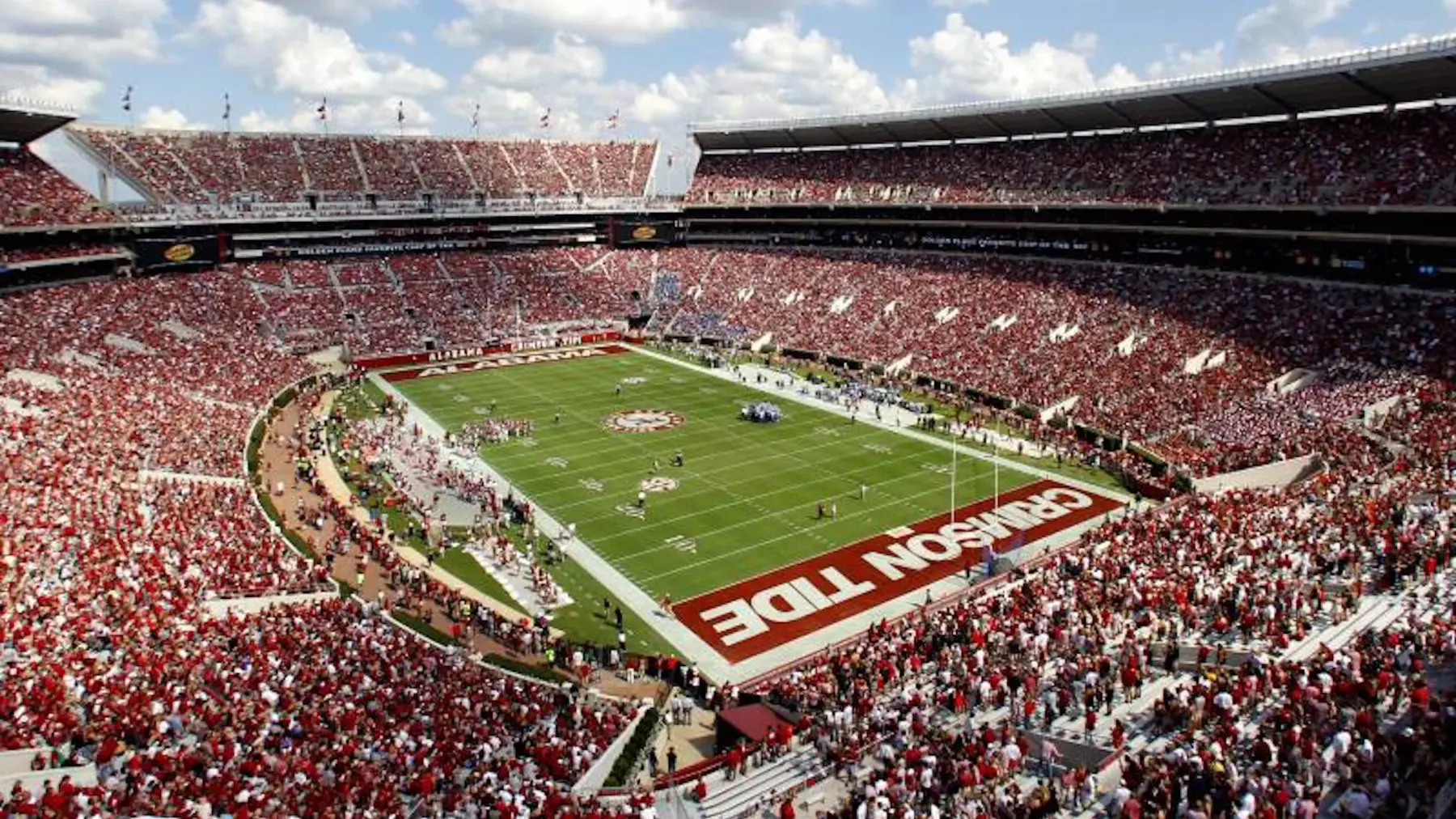
A full college football stadium seen from the upper deck on a sunny afternoon
03Game day · a full afternoon in the sun
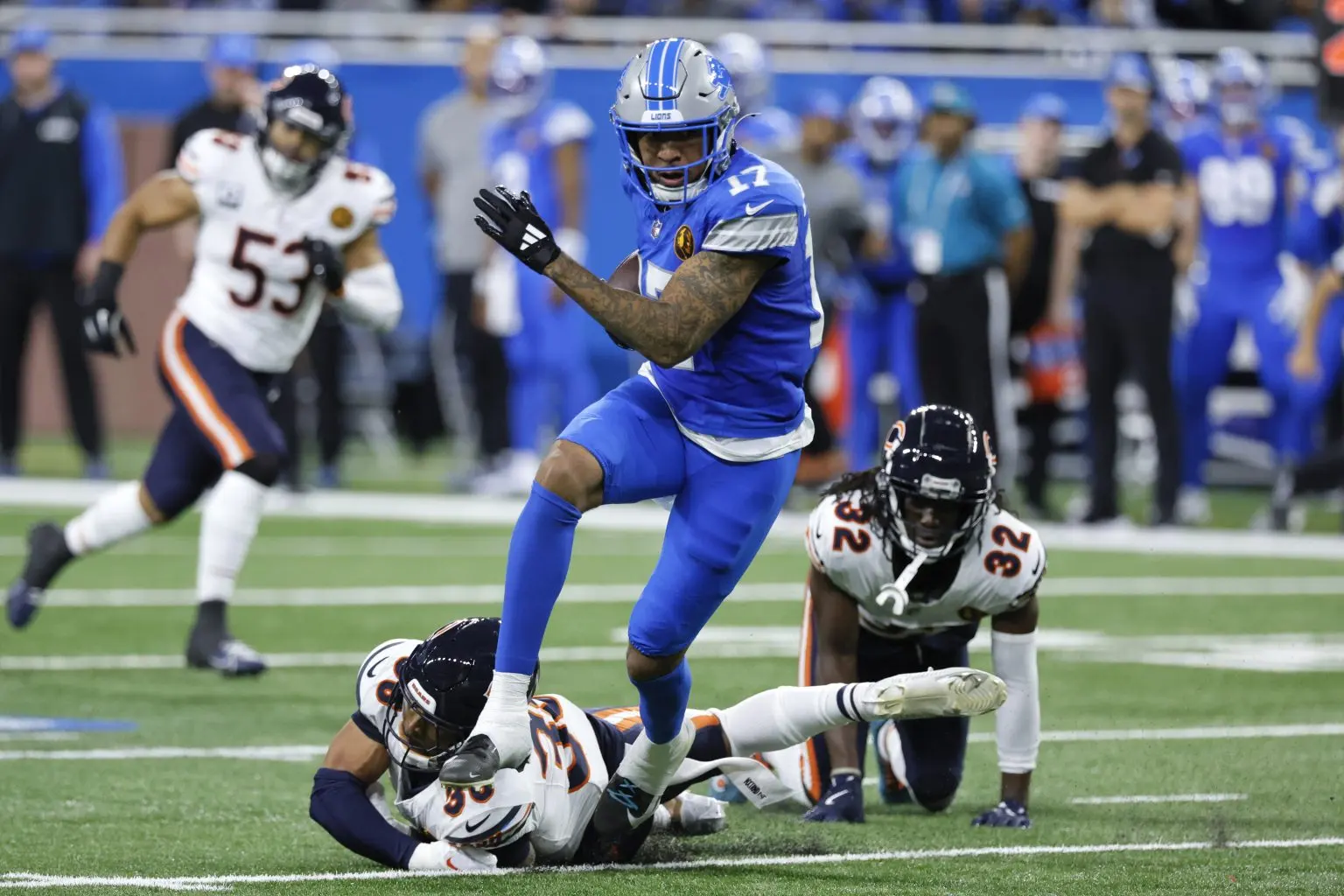
A ball carrier breaking a tackle during a football game
01Contact and collision · head and brain injury
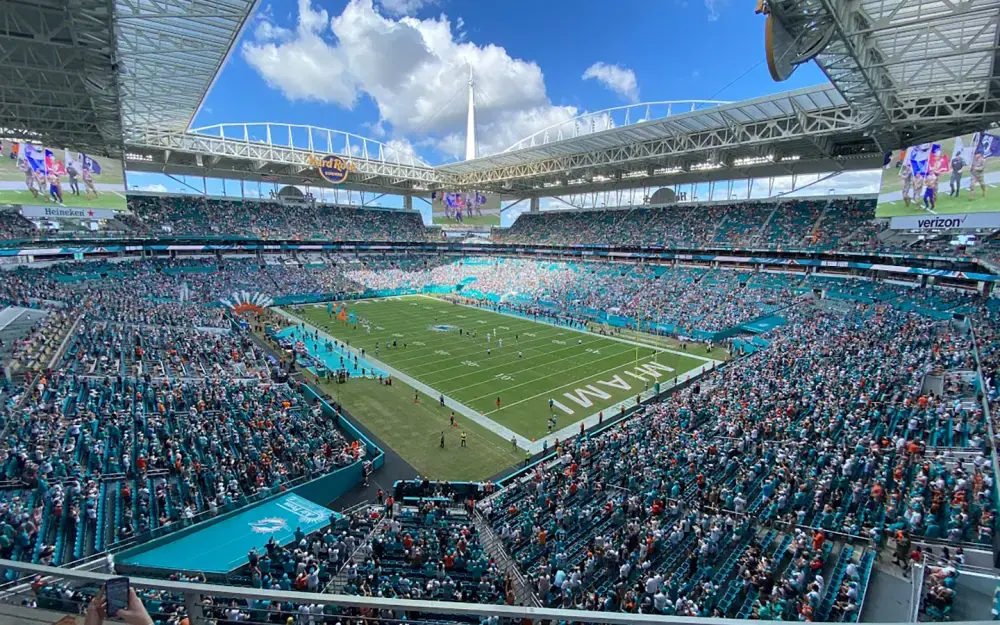
A football stadium under a canopy roof, viewed from high in the stands
06Venue-specific plans · every site is different
Published in fullIV

Cool first. Transport second.

The instinct is to load the athlete into an ambulance. The instinct is wrong. Every minute above a core temperature of 105°F is doing damage that a hospital thirty minutes away cannot undo. The tub is the treatment.
  1. 0:00105°F+

    Recognize

    Core temperature above 105°F together with central nervous system change — confusion, aggression, staggering, collapse. Not thirst. Not cramping. A different athlete than the one who took the field.

  2. 0:02Submerge

    Immerse on site

    Whole-body cold water immersion where the athlete fell. Stock tank, tarp, kiddie pool, whatever is already at the field. Do not wait for a better container and do not move to a better location.

  3. 0:30102°F

    Cool to 102°F, then go

    Keep cooling until core temperature reads roughly 102°F. Only then does the athlete leave the field. The first thirty minutes belong to the staff on the ground — the Emergency Action Plan decides whether they are used well.

The full safety agenda
Core body temperature, °F — not air temperature
108°
106°
105°Heat stroke threshold — begin immersion now
104°
103°
102°Cleared for transport
101°
100°
OrganizationsV

One teaches it. One makes sure nobody misses it.

Each brand operates under its own name and its own audience. Both carry the Council's standards and the same reason for existing.
01Education and certification

Ice Athletes

Stay Cool. Stay in the Game.

The Council's training arm, and the place its standards are examined and credentialed. Its flagship course is the cooling certification for exertional heat illness — six modules, about two hours, medically reviewed, carrying credit that governing bodies recognize.

FormatSelf-paced video, 6 modules
Credit2.0 CEU — NCAA, NATA, NFHS, PSC
Seat$79, one year of access
BasePensacola, FL
Visit iceathletes.com↗
02National public campaign

National Stay Cool Day

One afternoon. Every campus. Everybody in.

A free, single-afternoon event and world record attempt: thousands of athletes on campuses across the country stepping into ice baths at the same minute, for three minutes, so that the treatment for heat stroke stops being unfamiliar the first time it is needed — and so an entire community spends one afternoon talking about athlete safety.

DateApril 8, 2027
Start2:00 PM ET, simultaneous
DurationThree minutes, submerged
CostFree to participate
Visit nationalstaycoolday.com↗

The record attempt

Twelve o'clock, eastern.
Everybody in at once.

On April 8, 2027, athletes on campuses across the country step into ice baths at the same minute and stay in for three minutes. It is a world record attempt, and it is also a rehearsal — and one afternoon when an entire community talks about athlete safety at the same time.

A football player walking out onto the field past a line of teammates
One afternoon, the whole country at once

Time to submersion

–––
Days
––
Hours
––
Minutes
––
Seconds
DateWednesday, April 8, 2027
Start2:00 PM ET, simultaneous
HoldThree minutes
EntryFree for every program

In memory of

Eric Hasenyager

The Council exists in Eric's memory. Ice Athletes keeps a Memory Wall for the athletes lost to heat since — each one a case where the protocol on this site, applied in the first minutes, would have changed the afternoon.

Visit the Memory Wall →

Bring the standards
to your program.

Districts, state associations, club leagues and single programs all start the same way — a conversation about what your staff would do in the first ten minutes.