Player Safety Council / Booster clubs
Booster clubs
For Booster Clubs and Parent Organizations: Helping Your Program Get Heat-Ready
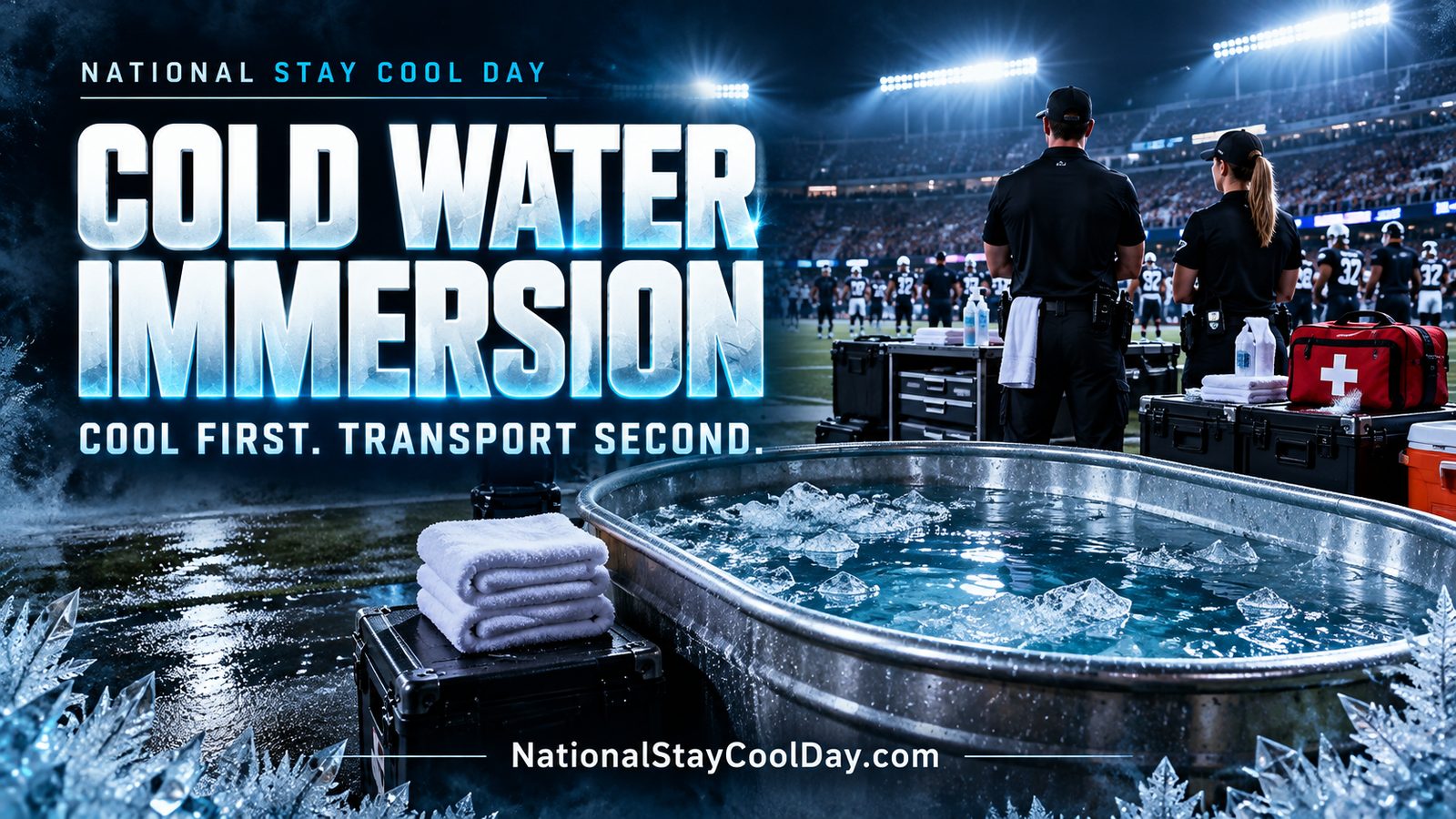
This page is for booster club officers, parent organization leaders and the families who help run game days. It is also for the athletic directors and coaches who work with them.
Start with the plan, not the shopping list
Before buying anything, ask the athletic director or head coach for the program's written emergency action plan. The plan tells you what the program already has and what is missing.
- If there is no written plan, point the school to the free National Stay Cool Day EAP builder. A school leaves with a finished plan in its own name.
- If there is a plan, ask which practice sites have a cooling tub, a reliable ice supply and a clear ambulance entrance, and which don't.
- Let the school decide what to buy. Go through the school's normal approval and purchasing process so gear is owned, stored and maintained by the program.
What boosters can help put in place
- A cooling tub at every practice and game site, not just the main field. Off-campus fields and away venues count too.
- Ice that is there before practice starts. An ice machine, a standing ice delivery or a parent rotation that brings ice every hot day. A tub with no ice isn't a cooling setup.
- Storage and setup. A place to keep the tub near the field, and a named person who fills it before each hot session.
- Shade and water on the sideline, including for younger siblings and fans on game nights.
Game days and team events
Boosters often run the concession stand, the gate and the team tent. Use those jobs to back up the plan:
- Keep extra ice at the concession stand that can go to the field in an emergency.
- Make sure gate and parking volunteers know where the ambulance comes in and keep that path clear.
- Know who on the coaching or medical staff is in charge of an emergency that night, and send people to them.
- For camps, tailgates and summer workouts, ask whether the cooling setup goes with the team.
The emergency order every adult should know
Exertional heat stroke is 100% survivable when the athlete is cooled fast, on site. Booster volunteers may be the closest adults when something goes wrong, so everyone should know the same order:
- Call 911 and start cooling at the same time. One person calls. Everyone else works on cooling.
- Get the athlete into cold water. Cold-water immersion with ice agitation is the standard. Cooling should start within 10 minutes.
- Keep cooling. The goal is about 102°F within 30 minutes. At 104°F the body loses its ability to regulate its own temperature, so it can't cool itself down.
- Cool first, transport second. Cooling happens before the athlete is moved.
- Remove anything you can quickly but don't delay cooling because of gear removal.
The volunteers page covers what sideline helpers should watch for during a hot practice or game.
Talking to families
- Share the parents page at the preseason meeting so families know what a prepared program has in place.
- Remind families to tell the coach about illness, new medications or a past heat illness.
- Keep the message calm and practical. The goal is a program that is ready, not a scared sideline.
Where to go next
Build or refresh the program's plan with the free EAP builder. Athletic directors can use the athletic directors page, coaches the coaches page, and anyone checking a field before the season the preseason venue walkthrough. For questions about the Council, contact us.