Player Safety Council / EMS
EMS
For EMS and First Responders: Arriving at a Youth Sports Heat Emergency
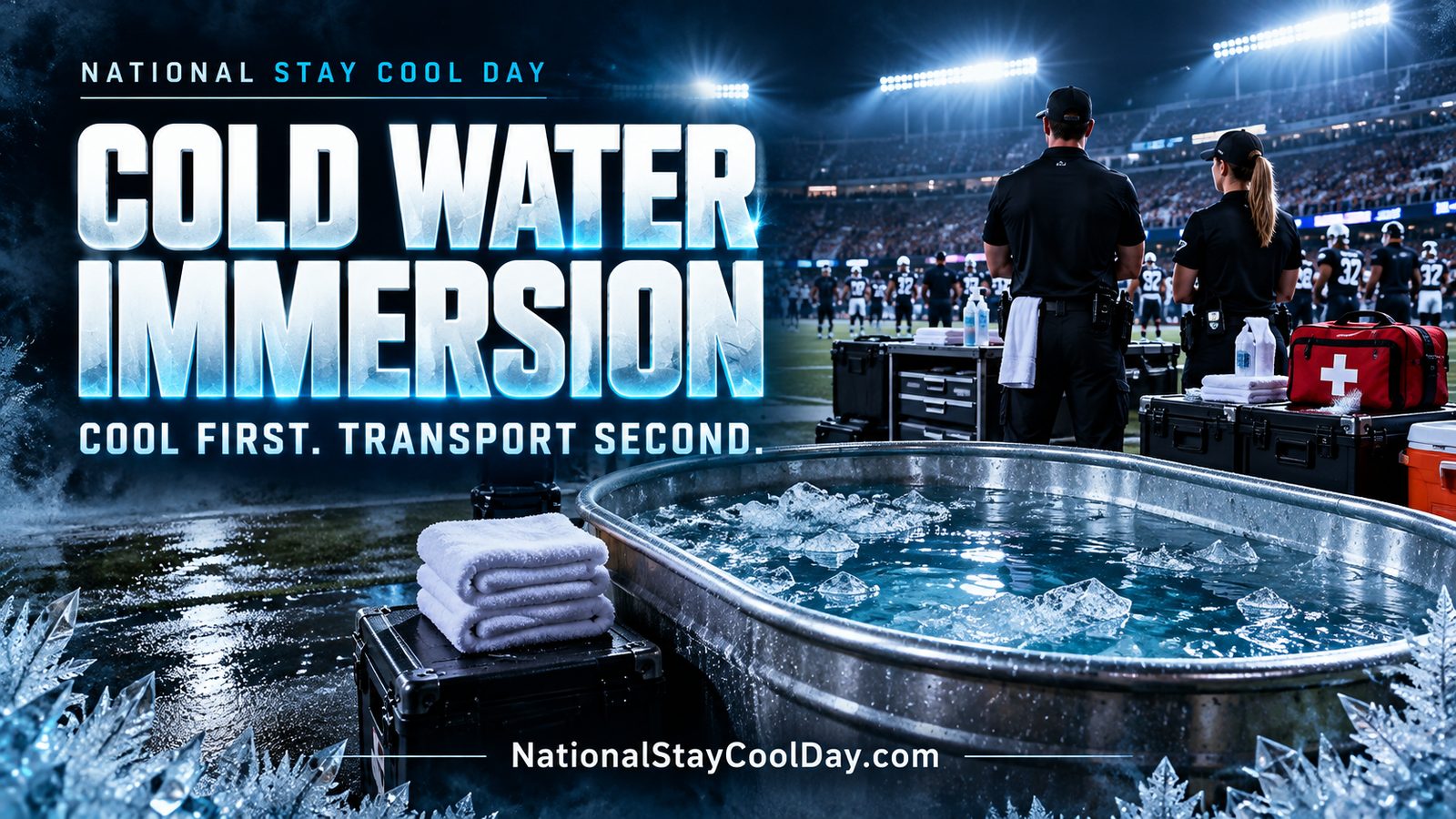
This page is for EMTs, paramedics and fire and EMS crews who respond to youth sports. It is also for the athletic trainers, coaches and athletic directors who write EMS into the emergency plan, so everyone expects the same scene when the ambulance arrives.
What you should expect to find
A prepared program will not wait for the ambulance to begin cooling. When you reach the field, look for:
- A cooling tub in use or being filled. Ice and water should be close to the athlete, with someone agitating the water if immersion has started.
- Someone who can tell you what happened. A coach, athletic trainer or assigned adult should give the time of collapse, what they saw and what they have done so far.
- A street address and a person ready to meet you. Programs should have posted the venue address and ambulance entrance, and named someone to meet the ambulance at the gate.
- A written plan, if the program built one. Not every youth program will have one in hand. If they do, it should list the venue address, the cooling setup and who owns each role.
What programs should have ready before you arrive
This list helps crews know what a prepared field looks like, and it gives programs a checklist before the first hot practice:
- Posted street address and ambulance entrance. Put them where any adult can read them to 911: the press box, the bench area or the gym door. If a field has no street address of its own, write down the nearest one plus plain directions.
- A gate that opens and a clear path to the field. Know who has the key or code on weekends and evenings. Keep parked cars, equipment and mowers off the route from the entrance to the athlete.
- Someone assigned to meet the ambulance and walk the crew in. Do not leave that to whoever happens to be near the parking lot.
- A tub, ice and water staged close to the field, not locked in a shed across campus or still packed in a truck.
- An AED whose location is known and reachable while the building is closed.
Facility and grounds staff own most of the venue setup. Coaches and athletic trainers make sure the tub and ice are out before warmups. Athletic directors make sure those roles are named in the written plan.
Why cooling starts before transport
Exertional heat stroke is 100% survivable when the athlete is cooled fast, on site. Programs are taught this order:
- Call 911 and start cooling at the same time. One person calls. Everyone else works on cooling.
- Get the athlete into cold water. Cold-water immersion with ice agitation is the standard. Cooling should start within 10 minutes.
- Keep cooling. The goal is about 102°F within 30 minutes. At 104°F the body loses its ability to regulate its own temperature, so it can't cool itself down.
- Cool first, transport second. The ambulance needs a clear path in, but cooling happens before the athlete is moved.
- Remove anything you can quickly but don't delay cooling because of gear removal.
For how heat stroke can look like something milder at first, see National Stay Cool Day's guide on heat exhaustion vs heat stroke.
Working with the people already there
They started cooling because every minute counts. Ask what has already been done, when it started and who has been with the athlete. The adults on the field are not trying to replace your crew. They started the steps they were told to start while you were on the way.
- Ask for the time of collapse, the first signs they noticed and when cooling began.
- Ask whether 911 has the correct street address and which entrance they used.
- Let them keep cooling until you take over the scene under your medical direction.
- If a written plan is available, use it for venue details. If it is not, the person who met you at the gate should still know the address, the AED and what has been done.
How your crew cares for and moves the athlete stays with your medical direction. This page does not set clinical protocols for EMS.
After the handoff
Once the athlete is in your care, the program still has work to do before the next hot day:
- Note what slowed the response: a locked gate, an address nobody could find, ice that was not staged, or no one assigned to meet the ambulance.
- Fix those things in writing and walk the venue again with the preseason venue walkthrough.
- Restock ice and put the tub back where it is supposed to sit for the next session.
- Refresh the written plan with the free National Stay Cool Day EAP builder if the program does not already have one.
Where to go next
Athletic trainers have their own athletic trainers page. Facility and grounds staff use the facility managers page. Coaches use the coaches page and athletic directors the athletic directors page. Walk the venue with the preseason venue walkthrough. Build or refresh a site plan with the EAP builder. For questions about the Council, contact us.