Player Safety Council / FAQ
FAQ
Heat Safety FAQ: Straight Answers for Youth Sports
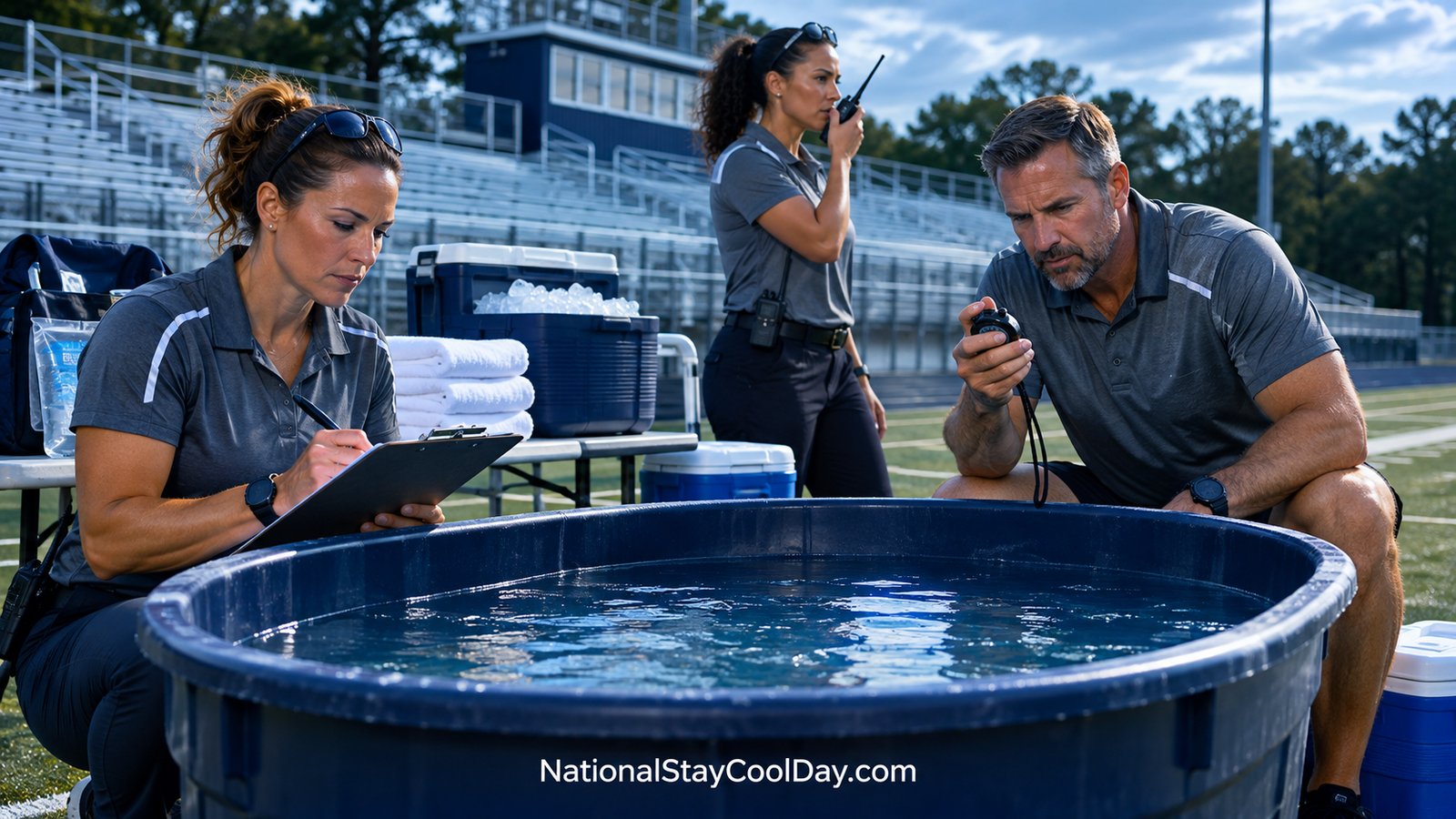
Can an athlete survive exertional heat stroke?
Yes. Exertional heat stroke is 100% survivable when the athlete is cooled fast, on site. What decides the outcome is how quickly cooling starts, not how quickly the ambulance arrives.
Why does body temperature matter so much?
At 104°F the body loses its ability to regulate its own temperature. Once that happens it will not come back down on its own, so someone has to bring it down.
An athlete just collapsed in the heat. What do we do first?
Call 911 and start cooling at the same time. Don't pick one. One person makes the call while others get the athlete into cold water.
- Start cooling within 10 minutes.
- Use whole-body cold-water immersion with ice agitation.
- Remove anything you can quickly but don't delay cooling because of gear removal.
- The goal is about 102°F within 30 minutes.
Shouldn't we just get them to the hospital?
Cool first, transport second. A ride to the hospital is time without cooling. The cooling has to happen at the field, and the athlete is moved once they've been cooled.
What is cold-water immersion?
It means putting the athlete's body in a tub of cold water and keeping the water moving with ice agitation. It is the treatment, not a comfort measure. Read why cold-water immersion comes first.
Aren't cold towels or ice packs enough?
No. They can make an athlete feel better, but they don't bring core temperature down fast enough to treat heat stroke. Read why cold towels don't treat heat stroke.
What should be at the field before practice starts?
A tub, water to fill it, ice, and people who know where it is and how to use it. The cooling station checklist lists the rest.
What is an emergency action plan?
It's a written plan for one venue that says who calls 911, who starts cooling, where the tub is, and how an ambulance gets to the athlete. Every field needs its own. You can build and print one with the emergency action plan builder, then check it in person with the preseason venue walkthrough.
What warning signs should we watch for?
Heat stroke often shows up late in a session, during the last drill or conditioning. This guide covers the signs every coach and parent should know.
Is the air temperature enough to decide whether to practice?
Not by itself. Humidity, sun and wind all change how hot it is for an athlete. Read why the heat reading at the field matters. Your program's medical staff should set the levels at which practice changes.
Our athletes just started practicing. Does that change anything?
Yes. The first two weeks of hot practices are when athletes are least used to the heat. Read why the first two weeks matter.
When can an athlete play again after heat stroke?
That's a medical decision, made step by step with their doctor. Read return to play after heat stroke.
I'm a parent. What should I ask my kid's program?
Start with what your kid's program should already have in place. It lists the questions to ask before the season and what a good answer sounds like.
I'm a coach or athletic director. Where do I start?
Coaches can start with a heat routine for every hot practice. Athletic directors can start with the heat season checklist. The Council's cooling standard is on the safety agenda page.
My question isn't here.
Contact the Council and we'll point you to the right resource.