Player Safety Council / Hosting visiting teams
Hosting visiting teams
Hosting Visiting Teams: A Heat Plan for Home Games
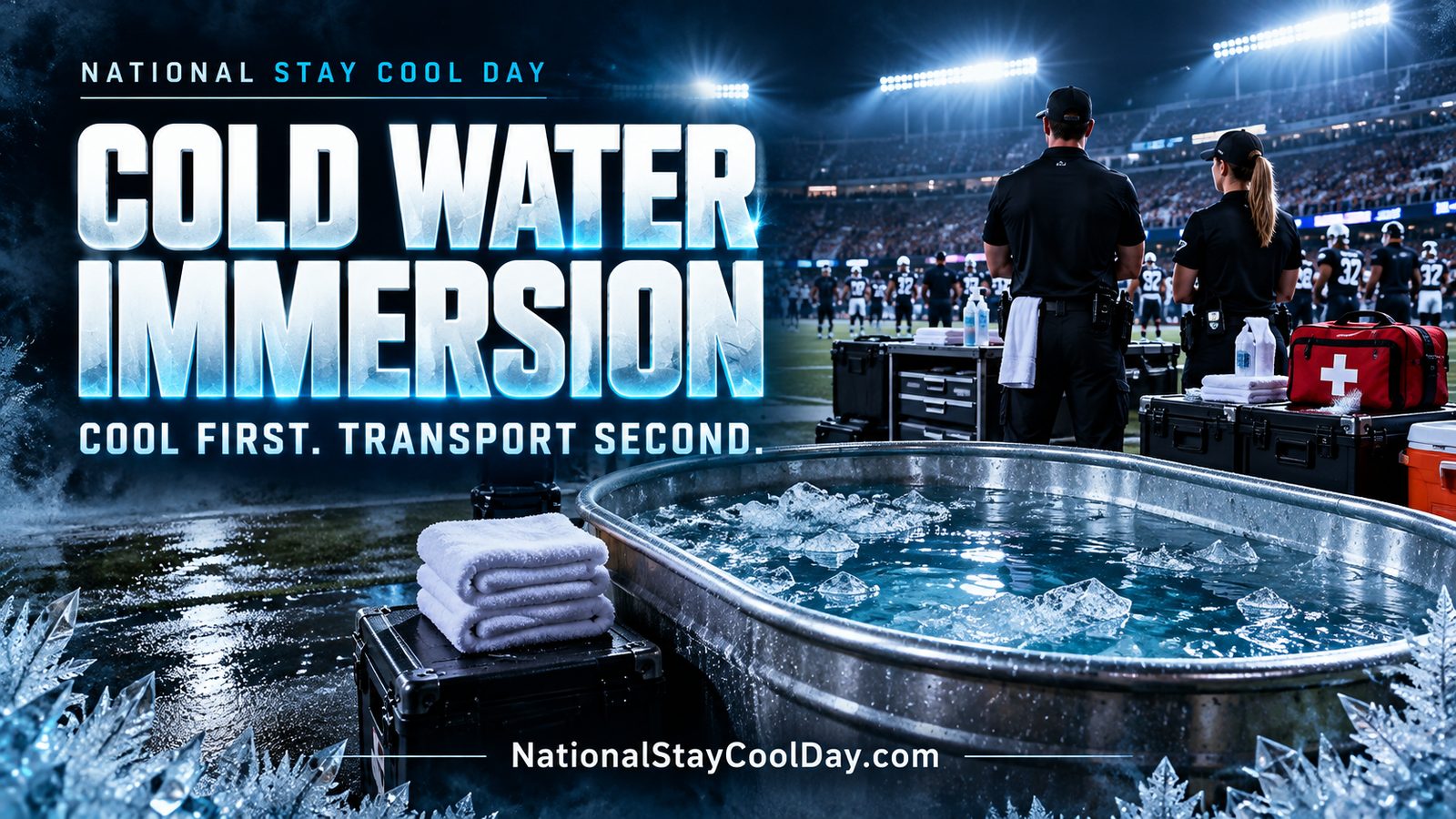
Your state association, school district or league may already have rules about heat, game changes and who decides. Follow those first. This page is about making sure the visiting team is part of your plan instead of guessing at it.
1. Before game day: send a short heat sheet
A few days before the game, send the visiting coach or athletic director one page with:
- The venue's street address, the entrance an ambulance should use, and where it can pull in.
- Where the water, shade, cooling tub and AED are.
- The name and cell number of your heat contact for that day, and a backup.
- Who makes the heat call, and how the visiting team will hear about an earlier start, extra breaks or a cancellation. The heat communication plan covers how to get that message out.
- Whether an athletic trainer will be on site, and if not, who on your staff leads cooling.
- What visitors should still bring: plenty of their own water and their own emergency contact list for every athlete.
2. When they arrive: a two-minute meeting
Before warm-ups, your heat contact meets the visiting coach and, if possible, the officials. Walk them to the tub and the water, point out the ambulance entrance, and agree on a few things out loud:
- Water breaks happen for both teams at the same time.
- Any coach can pull any player who looks wrong, no questions asked.
- If an athlete from either team goes down, your emergency plan starts right away.
- Who calls 911 and who meets the ambulance.
3. During the game: treat both benches the same
- Give the visiting bench the same access to water, ice and shade that your own players have.
- Keep the cooling tub ready for anyone who needs it, not only your own team.
- If the heat call changes partway through, tell the visiting coach and the officials at the same time you tell your own staff.
4. If an athlete goes down
An athlete who seems confused, collapses or stops making sense is an emergency, no matter which team they play for. Don't wait to sort out whose player it is. The cooling order stays the same every time:
- Call 911 and cool at the same time. One person calls while others start cooling.
- Start cooling within 10 minutes. Cold water with ice agitation, with the goal of about 102°F within 30 minutes. At 104°F the body loses its ability to regulate its own temperature.
- Cool first, transport second.
- Gear: remove anything you can quickly but don't delay cooling because of gear removal.
Exertional heat stroke is 100% survivable when the athlete is cooled fast, on site. The visiting coach calls the athlete's family. Your staff keeps cooling and meets the ambulance.
5. After the game
- If anything happened, check in with the visiting program before they leave and again the next day. The after a heat emergency page covers the days that follow.
- Write down anything visitors couldn't find or didn't know, and fix it on your heat sheet before the next home game.
A quick check before every home game
- Did the visiting team get the heat sheet?
- Does their coach know your heat contact by name?
- Is the tub filled, with ice ready, and can both benches reach the water?
- Does everyone know who calls 911 and who meets the ambulance?
The preseason venue walkthrough helps you find the details for your heat sheet, and the free National Stay Cool Day EAP builder helps you put your emergency plan in writing so you can share it.
Where to go next
Athletic directors can use the athletic directors page for the full season checklist, and the written heat policy page for what your rules should cover. Coaches can use the coaches page for the daily heat routine. For questions about the Council, contact us.