Player Safety Council / Officials
Officials
For Officials: Heat Safety From the Middle of the Field
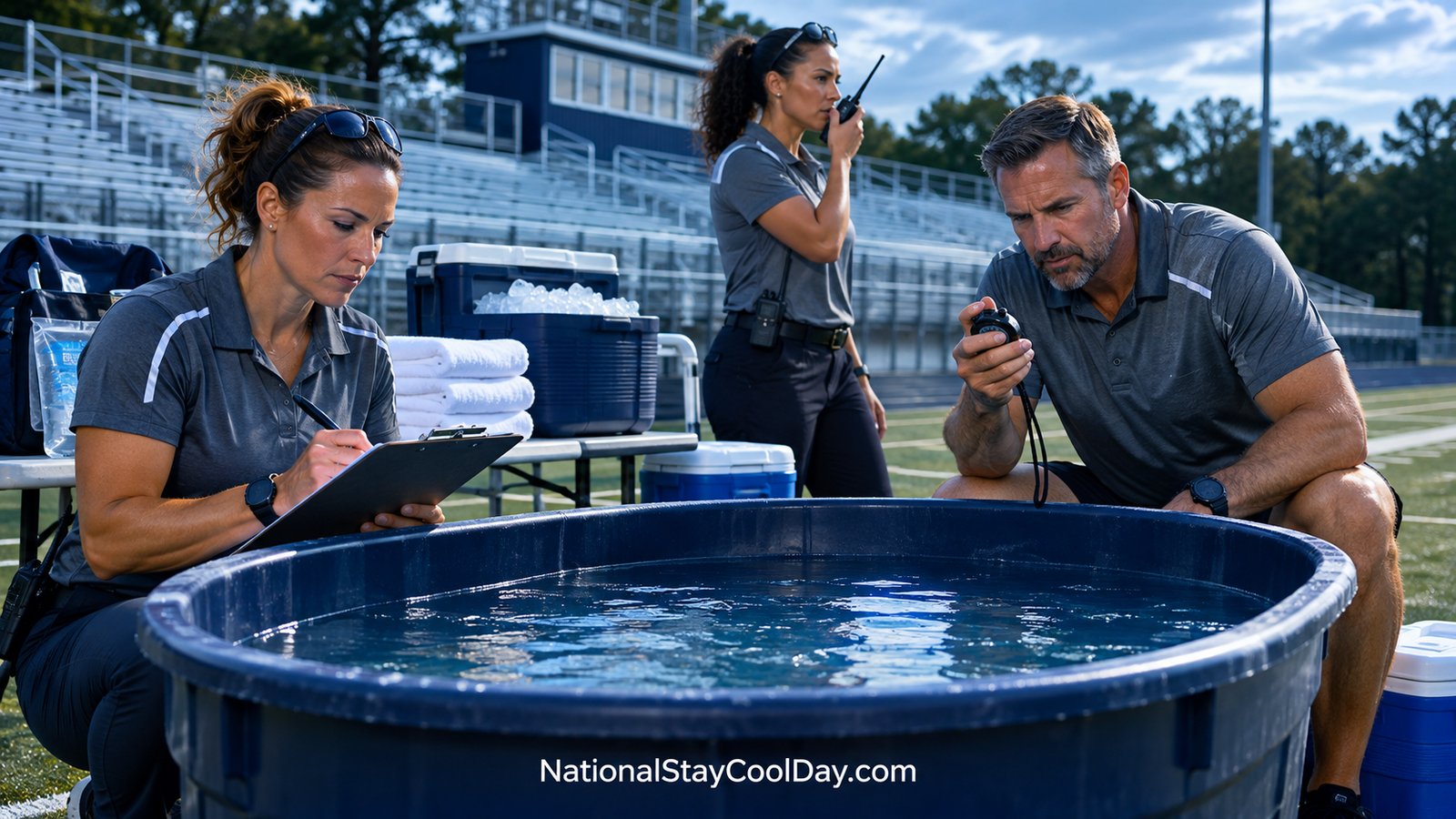
Officials see every athlete on the field, from both teams, for the whole game. Coaches are watching their own players and the scoreboard. Parents are watching their own kid. You're the one person whose job is to watch everyone. On a hot day, that matters.
Before the game
- Ask about the heat plan at the pregame meeting. It takes a minute. Ask each head coach or the site manager: Where is the cooling tub? Who calls 911? Where is the AED? Where does the ambulance come in? If nobody knows, say so before the game starts.
- Know the heat rules for this game. Your league or association decides when breaks are added, when games are shortened and when play stops. Know which rules apply today, and who at the site makes the call if conditions change.
- Look at the conditions where you're playing. A turf field or a court in full sun can be far hotter than the forecast. Check how your league says to measure it.
- Take care of yourself too. You're working hard in the same heat, often for game after game. Drink before you start, bring more than you think you need, and use every break.
During the game
- Use the breaks your rules allow, and don't rush them. Let athletes get to water and shade. A break that gets cut short to stay on schedule doesn't do its job.
- Watch for the athlete who looks off. You'll often notice before anyone on the sideline does.
- Stop play for an athlete in trouble. Don't wait for the next dead ball if an athlete is stumbling, confused or down. Stop the game and get the athlete's coach or medical staff to them right away.
What to watch for
An athlete with exertional heat stroke may not look like they're in danger at first. Watch for an athlete who:
- seems confused, dizzy or out of it,
- is acting strange, irritable or not like themselves,
- stumbles, can't keep up, or can't follow simple directions,
- collapses or goes down during or after hard play in the heat.
Any change in how an athlete thinks or acts during hard play in the heat should be treated as heat stroke until proven otherwise. Don't let anyone talk it down to "just tired."
If an athlete goes down
Exertional heat stroke is 100% survivable when the athlete is cooled fast, on site. Officials usually aren't the ones doing the cooling, but you can make sure it starts. This is the order the site's staff should follow:
- Call 911 and start cooling at the same time. If no one has called yet, call or point to one person and tell them to call.
- Get the athlete into cold water. Cold-water immersion with ice agitation is the standard. Cooling should start within 10 minutes.
- Keep cooling. The goal is about 102°F within 30 minutes. At 104°F the body loses its ability to regulate its own temperature, so it can't cool itself down.
- Cool first, transport second. The athlete shouldn't be loaded into a car or ambulance before cooling has been done.
- Remove anything you can quickly but don't delay cooling because of gear removal.
While the staff works, you can help in simple ways: keep the field clear, hold the game, send someone to the gate to bring the ambulance crew straight in, and keep other athletes back.
After the game
- If you stopped play for a heat problem, write down what happened and when, and report it the way your league asks.
- If the heat plan was missing or didn't work, tell the league or site manager. That's how the next game gets safer.
Where to go next
Coaches and athletic directors can find their own checklists on the coaches page and the athletic directors page. Any venue can build a free, printable emergency action plan with the National Stay Cool Day EAP builder. For questions about the Council, contact us.