Player Safety Council / Preseason staff meeting
Preseason staff meeting
The Preseason Heat Meeting: An Agenda for Your Whole Staff
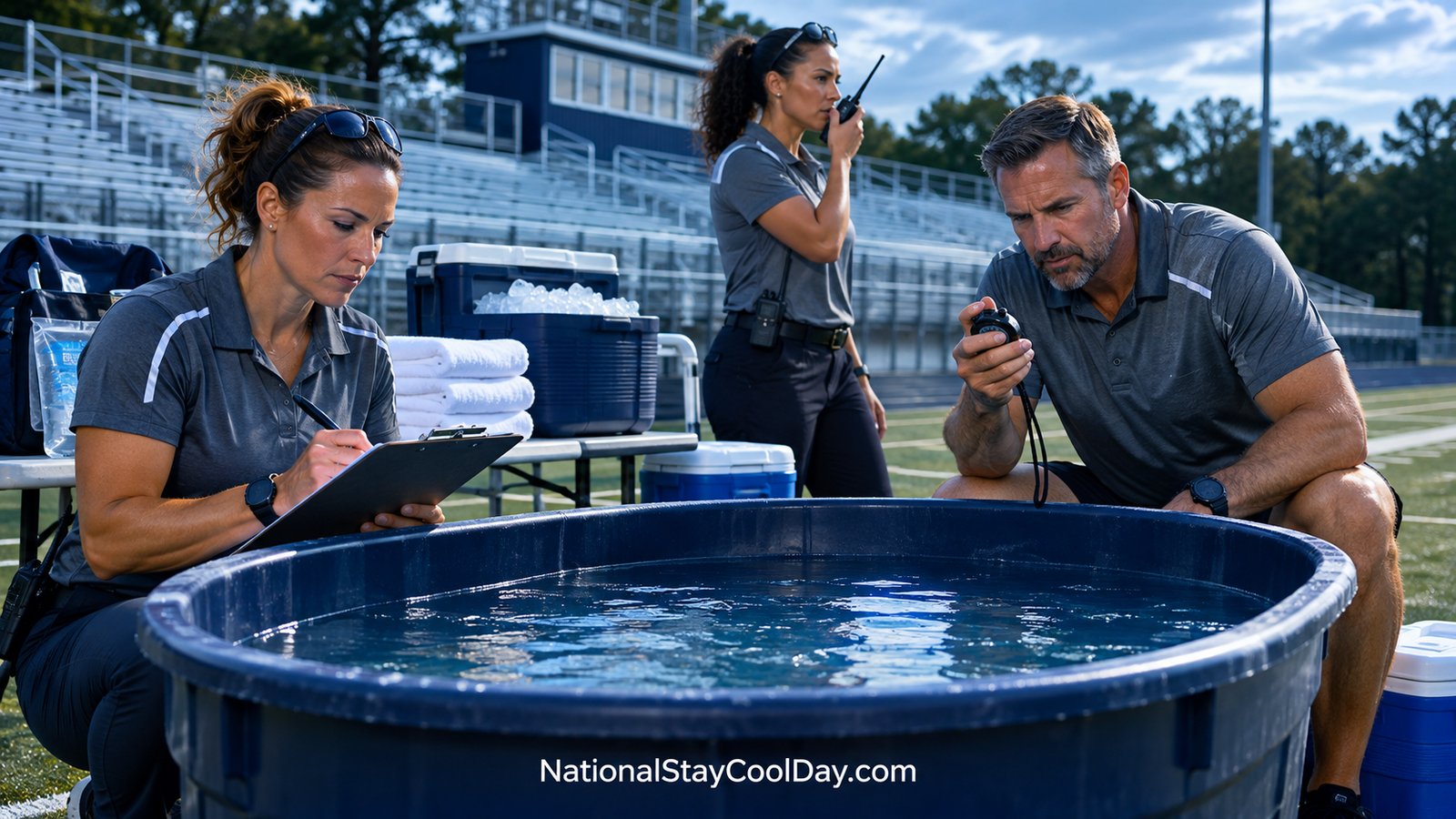
Your state association, school district or league may already require heat training or set rules for practices and games. Follow those first. This meeting is about making sure your own people know your plan and have walked through it together.
Who should be there
- Every head and assistant coach.
- Your athletic trainer, if you have one.
- The athletic director or program leader.
- Volunteers who run water, the clock or the gate.
- The school nurse, if your program is school-based.
- Whoever handles ice, keys and gates at your venue.
Anyone who can't make it gets the notes and a walk to the cooling tub with someone who was there, before they work a practice.
What to bring
- Your written heat policy.
- The emergency action plan for each venue you use. The free National Stay Cool Day EAP builder can help you write one.
- A map of each venue showing water, shade, the tub, the AED and the ambulance entrance.
- The cooling tub itself, set up where it will sit during practice.
- A phone list for staff, with a backup for each person.
The agenda
1. Why we're here (5 minutes)
Exertional heat stroke is 100% survivable when cooling starts fast, on site. Everything else in this meeting is about making sure that happens on your watch.
2. Who makes the heat call (10 minutes)
Name the person who decides when practice moves, gets shorter or stops, and who decides when they aren't there. Then agree on how staff, athletes and families hear about a change. The heat communication plan walks through it.
3. What to watch for (10 minutes)
Go over what a struggling athlete looks like: confused, stumbling, acting strange, not making sense, or collapsing. Agree on one rule out loud: any adult can pull any athlete who looks wrong, and no one argues about it on the field.
4. Who does what (10 minutes)
Give every job a name and a backup:
- Who calls 911.
- Who starts cooling.
- Who meets the ambulance at the entrance.
- Who keeps track of the time once cooling starts.
- Who keeps the other athletes back and together.
- Who has the athlete's emergency contact and calls the family.
5. The cooling order (10 minutes)
Read it out loud, then have someone say it back:
- Call 911 and cool at the same time. One person calls while others start cooling.
- Start cooling within 10 minutes. Cold water with ice agitation, with the goal of about 102°F within 30 minutes. At 104°F the body loses its ability to regulate its own temperature.
- Cool first, transport second.
- Gear: remove anything you can quickly but don't delay cooling because of gear removal.
6. Walk to the tub and run it once (15 minutes)
Leave the room. Start where practice happens and walk to the tub. Have each person do their job while someone keeps time. Note how long it takes to get an athlete from the field into the water, and where things slowed down. The heat stroke drill guide has a full version to run again later in the season.
7. What's missing (5 minutes)
Write down every gap that came up, like a locked gate, no cell signal, not enough ice or a tub that takes too long to fill. Give each one an owner and a date to fix it.
After the meeting
- Send the notes and the role list to everyone, including people who missed it.
- Put the role list in each coach's bag and next to the tub.
- Staff who join partway through the season get the same walk-through before their first practice. The new coaches page can help.
- Put a short refresher on the calendar for later in the season. The heat season calendar shows where it fits.
A quick check before the first practice
- Does every adult know who makes the heat call?
- Does every job on the role list have a name and a backup?
- Has everyone stood at the tub and said the cooling order out loud?
- Does every gap from the meeting have an owner and a date?
Where to go next
Athletic directors can use the athletic directors page for the full season checklist, and the preseason venue walkthrough to check each venue. Coaches can use the coaches page for the daily heat routine. For questions about the Council, contact us.