Player Safety Council / Every language
Every language
Heat Safety in Every Language: Making Sure Every Family Gets the Message
Your school district, league or city may already have rules or services for sharing information with families in other languages. Start there. This page is about making sure heat safety is part of what gets shared.
Find out who you need to reach
- Ask on your registration or sign-up form which language each family prefers for messages from the team.
- Ask the same question of your coaches and volunteers. Some may be able to help, and some may need the heat plan in their own language too.
- Keep the answers with your roster and your contact list, so the right message goes to the right family every time.
What needs to be in every family's language
- The early warning signs of heat illness, and that the athlete should tell an adult right away.
- What the family should send with the athlete on a hot day, like water and light clothing.
- How the team will tell families when practice is moved, shortened or cancelled for heat.
- What happens if an athlete has a heat emergency, and how the family will be contacted.
- The questions the program asks about recent illness, new medicines or time away from activity.
Short and clear beats long and complete. A one-page sheet the family actually reads is worth more than a long packet they set aside.
Getting the words right
- Use the translation or interpreter help your school or district already offers, if it has any.
- Have someone who speaks the language well read the finished version before it goes out. A word-for-word translation of a medical term can come out confusing or wrong.
- Use simple words and short sentences in English first. Plain English is easier to translate well. The heat safety glossary can help with the terms.
- Pictures help everyone. A drawing of a water break, shade or the cooling tub needs no translation.
- Don't rely on an athlete to translate health information for their own family. Kids may leave out what they think will get them benched.
Athletes who are still learning English
- Make sure they know where the water is, when breaks happen, and that they can drink any time.
- Teach them a simple way to say "I don't feel right," in words or with a hand signal the whole team knows.
- Pair them with a teammate who can help, especially during their first hot practices.
- Watch them a little more closely. An athlete who can't easily explain how they feel may not speak up until things are serious.
Heat messages and changed practices
- When heat changes the schedule, send the message in every language your families use, at the same time. A family that gets the news an hour late may already be on the way.
- Keep a few ready-made messages written ahead of time, like "Practice is moved to the morning" or "Practice is cancelled today because of heat," so nobody has to translate in a rush.
- The heat communication plan covers who sends which message, and when.
In an emergency
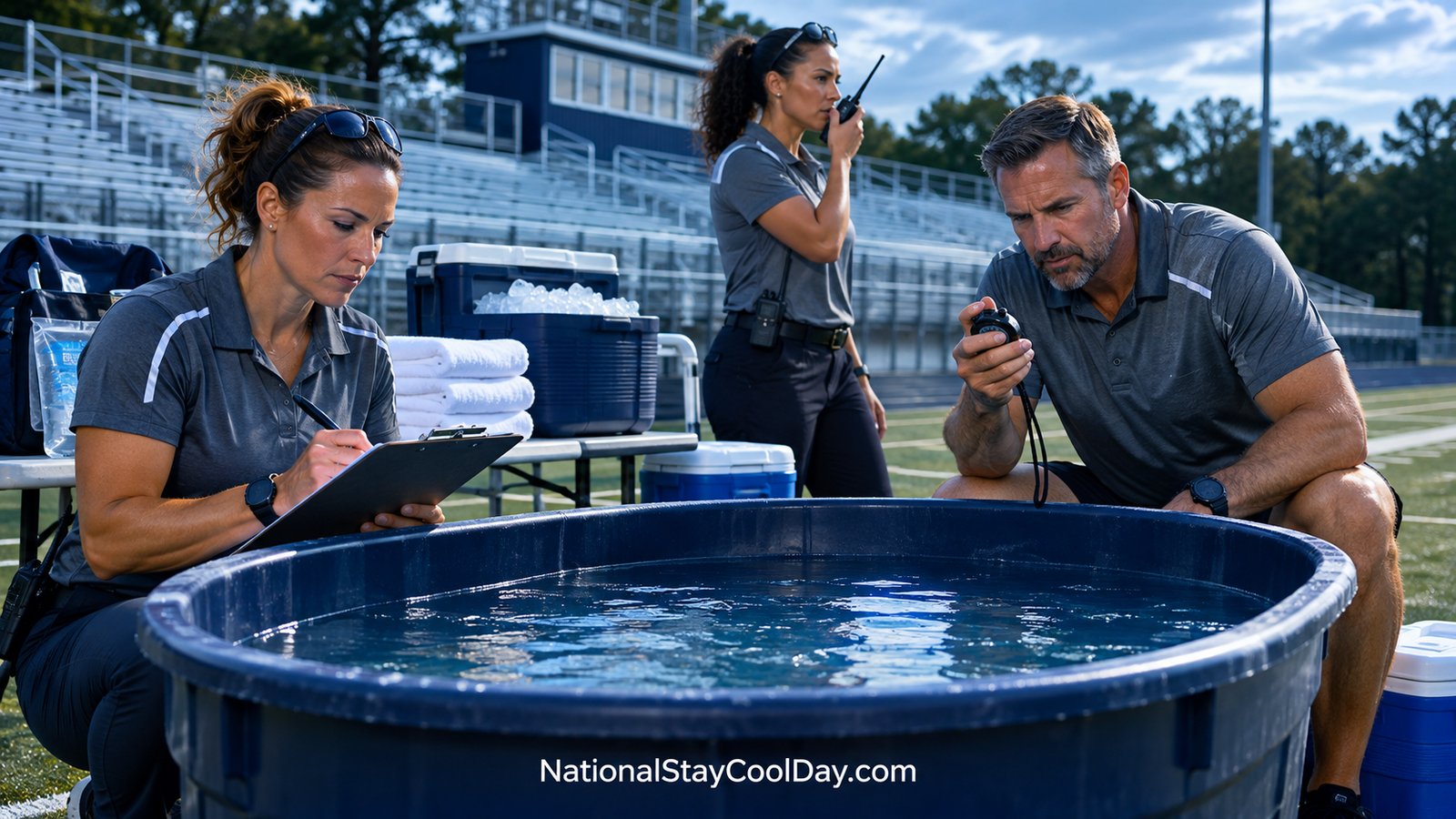
Exertional heat stroke is 100% survivable when cooling starts fast, on site. Language should never slow down the response. Every coach should know these steps by heart:
- Call 911 and cool at the same time. One person calls while others start cooling. The caller should be someone who can clearly give the address and the way in.
- Start cooling within 10 minutes. Cold water with ice agitation, with the goal of about 102°F within 30 minutes. At 104°F the body loses its ability to regulate its own temperature.
- Cool first, transport second.
- Gear: remove anything you can quickly but don't delay cooling because of gear removal.
Decide ahead of time who will call the family and, if needed, who can speak with them in their language. Write it into your emergency plan so nobody has to figure it out in the moment.
A quick check for your program
- Do you know which language each family prefers?
- Are the warning signs, hot-day reminders and emergency steps written in each of those languages?
- Did someone who speaks the language well check each version?
- Are heat schedule changes sent in every language at the same time?
- Does your emergency plan say who contacts a family in their own language?
Where to go next
The parent guide covers what families should expect from a program, and the preseason staff heat meeting is a good time to plan your family messages. The late joiners page covers athletes and families who arrive after the season starts. For questions about the Council, contact us.
Take the next step: build your heat emergency action plan with the free National Stay Cool Day heat safety tools, then sign up your school for National Stay Cool Day on April 8, 2027. Both are free.