Player Safety Council / Heat log
Heat log
The Daily Heat Log: What Your Program Should Write Down on Every Hot Day
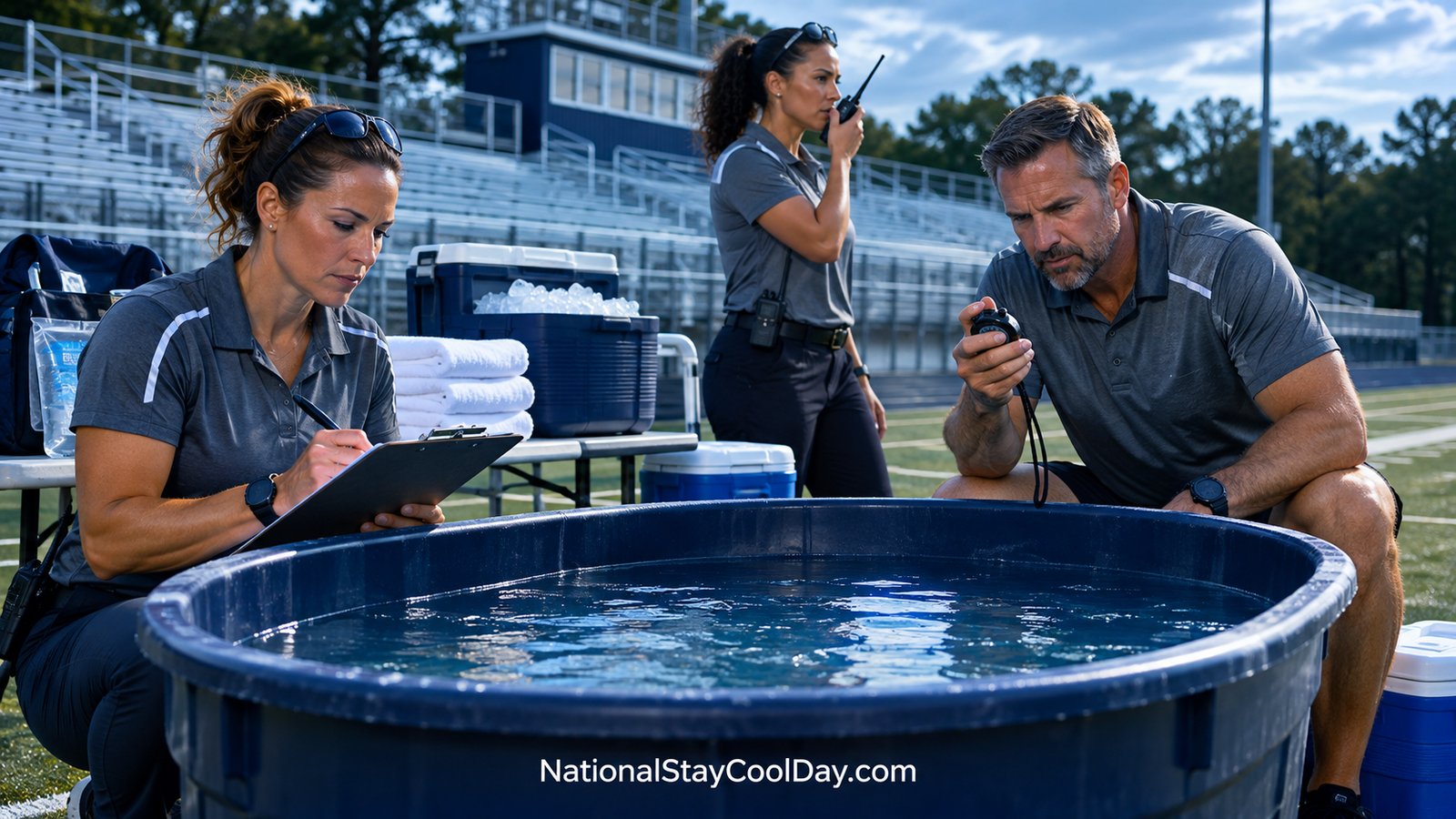
Your state association, school district or league may have its own rules about heat readings and records. Follow those first. This page is about keeping a simple log your staff will really use.
Why a log matters
On a hot afternoon, people make a lot of quick calls: start late, cut the drills short, move inside, add a water break. Those calls are easy to forget by the next week. A log keeps them. It helps a new coach see how the program has handled hot days. It shows whether the tub was ready every time or only some of the time. And if something goes wrong, it gives everyone the facts instead of everyone's memory.
What to write down for every hot session
- Date, team and venue. One line per session, not one per day, if more than one team is out.
- Start and end time. The time the session really started and ended, not the time on the schedule.
- The heat reading. Whatever measure your plan uses, the time you took it, and where you took it (on the field, not in the parking lot).
- What you changed because of it. Shorter session, fewer layers of gear, more breaks, moved indoors, cancelled. If nothing changed, write that too.
- Cooling setup check. Tub filled and in the shade, ice on hand, water out, before the first drill.
- Who was in charge. The person making heat calls that day, and who was on site with medical training, if anyone.
- Anyone who was pulled out. What you saw, what you did, and who you told. Keep athletes' health details private and follow your school or league rules on that.
- Signature or initials of the person who filled it in.
Keep it simple enough to use
- Use one page with boxes to check and short blanks to fill in. If it takes more than a couple of minutes, people stop doing it.
- Keep it where the work happens: on a clipboard with the tub, in the team bag, or in a shared form on a phone.
- Make filling it in part of someone's job. Put that role in your written heat policy.
- Fill it in before practice starts and finish it after the last athlete leaves, not from memory the next morning.
Log your drills too
Each time your staff practices the cooling plan, write down the date, the venue, who took part, how long it took to get the tub ready and anything that went wrong. A drill that turns up a problem is a drill that did its job, as long as someone writes the problem down and fixes it.
Look back at it
- Once a week during the hot months, have the athletic director or head coach read the week's logs.
- Look for gaps: days with no reading, days the tub wasn't set up, teams that never changed anything.
- Bring what you find to your staff, and use it at your preseason staff meeting next year.
- Keep old logs as long as your school, district or league requires. Ask them if you're not sure.
The cooling order every log should sit next to
Exertional heat stroke is 100% survivable when cooling starts fast, on site. Print the cooling order on the back of your log sheet so it's in hand when it counts:
- Call 911 and cool at the same time. One person calls while others start cooling.
- Start cooling within 10 minutes. Cold water with ice agitation, with the goal of about 102°F within 30 minutes. At 104°F the body loses its ability to regulate its own temperature.
- Cool first, transport second.
- Gear: remove anything you can quickly but don't delay cooling because of gear removal.
A quick check of your log
- Does every hot session have a heat reading with a time and a place?
- Does it say what was changed because of the reading?
- Was the tub checked before every session?
- Is there a name on every entry?
- Has someone read this week's logs?
Where to go next
The athletic director's checklist shows where the log fits in a full heat season, and the heat season calendar shows when to set it up. If something does go wrong, the after a heat emergency guide covers what to write down in the days that follow. The free National Stay Cool Day EAP builder can help you write an emergency action plan for each venue. For questions about the Council, contact us.