Player Safety Council / Middle school sports
Middle school sports
Middle School Sports: A Heat Plan for Younger Athletes and Smaller Staffs
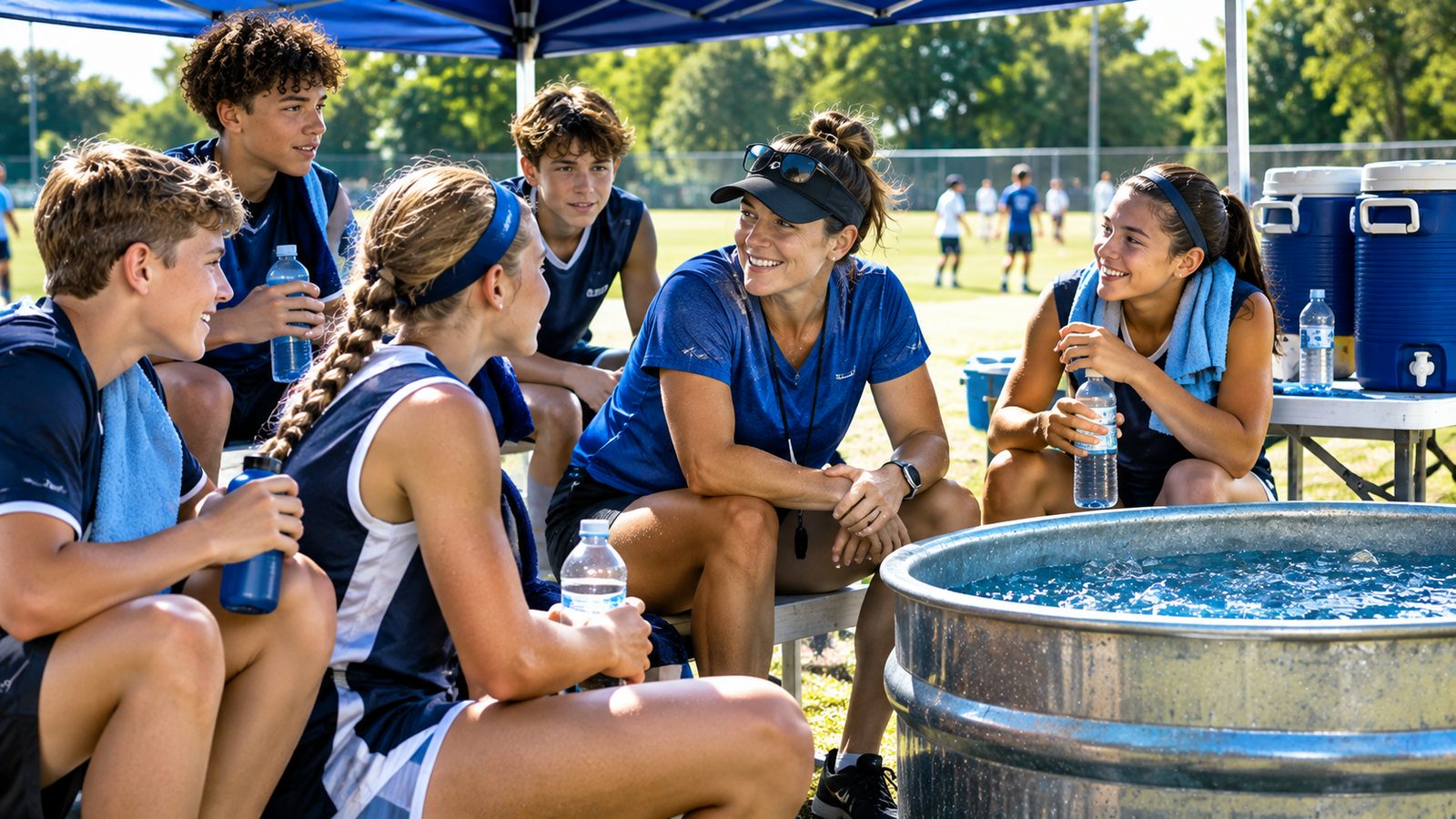
A middle school program can borrow most of its plan from the high school down the road. The emergency steps are the same at any age. What changes is how much the adults have to watch for, ask about and decide for the athletes.
Plan for the kids you actually have
- Many players have never been through a preseason. Build up the first two weeks slowly, even for kids who played rec ball all summer.
- Younger athletes often keep going to please a coach or keep up with friends. Don't wait for them to ask for a break. Schedule the breaks.
- Some kids won't know the words for what they feel. Teach the team simple ones on day one: dizzy, sick to my stomach, headache, can't think straight.
- Tell every athlete it is never wrong to sit out and say so. Then back it up the first time someone does.
Plan for the staff you actually have
A middle school team may be coached by a teacher who finished class ten minutes ago, with one volunteer helping. If your school does not have an athletic trainer or nurse at every practice, the coach is the first responder. Plan for that on purpose.
- Make sure every head coach and helper knows the emergency steps below before the first practice. Our page for new coaches is a good place to start.
- Name one adult at each practice who watches athletes, not drills.
- Know who on campus can help fast, and how to reach them after school hours.
- If the high school shares a field or an athletic trainer with you, write down who covers which practice.
After-school practice in the hottest part of the day
Middle school practices often start right after the last bell, which can be the hottest stretch of the afternoon. Kids may also have skipped lunch or barely had water all day.
- Give athletes time to drink and eat something before practice starts.
- On hot days, shorten practice, move it later, take off extra gear, or move it indoors. Decide who makes that call before the season.
- Keep the cooling tub filled and ready with ice before athletes take the field, not after someone goes down.
The emergency steps every middle school coach should know
Exertional heat stroke is 100% survivable when cooling starts fast, on site. Every adult at practice should be able to:
- Call 911 and cool at the same time. One person calls while others start cooling.
- Start cooling within 10 minutes. Cold water with ice agitation, with the goal of about 102°F within 30 minutes. At 104°F the body loses its ability to regulate its own temperature.
- Cool first, transport second.
- Gear: remove anything you can quickly but don't delay cooling because of gear removal.
Practice these steps with your staff before the season. A short drill with the real tub on the real field shows you what is missing.
Pickup time counts too
Practice ending is not the end of the risk. Middle schoolers often wait outside for a ride, walk home or ride a bike in the heat.
- Keep an adult with athletes until the last one is picked up.
- Give waiting players shade and water.
- Watch for any athlete who looks worse after practice, not better. Treat that as an emergency.
Bring the parents in early
Parents of middle schoolers are often new to school sports too. Tell them how your program handles hot days, how you will reach them when practice changes, and what to watch for at home. Our guide for parents and heat communication plan can help, and heat safety in every language covers families who need the message in another language.
A quick check before the season starts
- Does every coach and helper know the emergency steps?
- Is there a cooling tub, water and ice at every practice site?
- Do we know who makes the hot-day call, and who covers practices without an athletic trainer?
- Is an adult with athletes until the last ride arrives?
- Have parents heard our heat plan from us?
Where to go next
School leaders can use the heat season checklist to put this in place across every team, and the preseason venue walkthrough will help you set up each field. For questions about the Council, contact us.
Take the next step: build your heat emergency action plan with the free National Stay Cool Day heat safety tools, then sign up your school for National Stay Cool Day on April 8, 2027. Both are free.