Player Safety Council / Staff changes
Staff changes
When Staff Changes: Keeping Your Heat Plan Working After People Leave
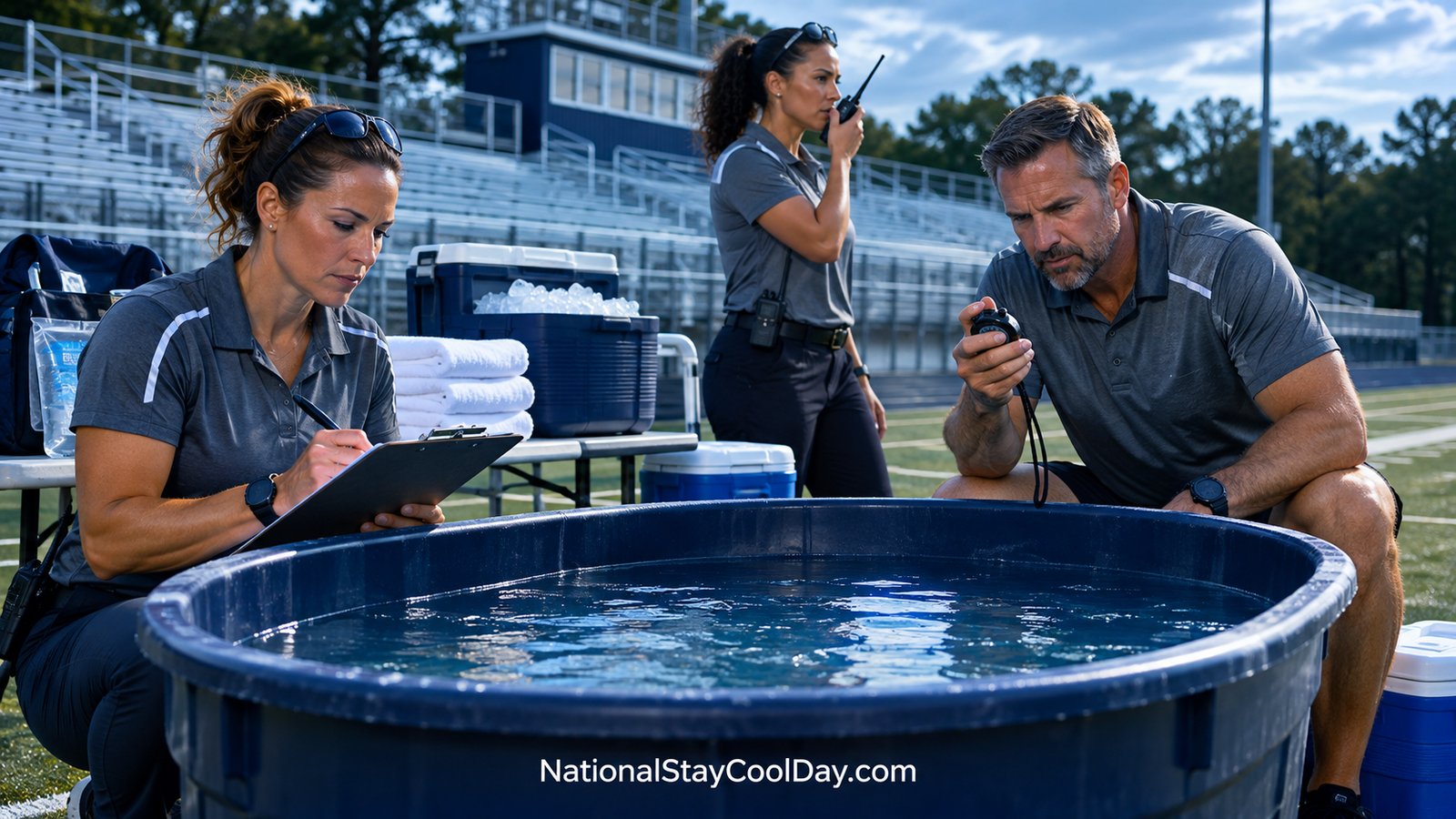
Your state association, school district or league may have its own rules for emergency plans and staff training. Follow those first. This page is about keeping the plan you already have from slipping through the cracks.
Why turnover is a heat risk
Staff changes tend to happen in late spring and summer, right before the hottest practices of the year. A new coach may not know where the tub is kept. A new athletic director may not know who orders the ice. An assistant who used to run the cooling station may be gone, and no one noticed that was their job. None of this shows up until the day it matters.
Put the plan on paper, not in someone's head
- Keep one written heat plan for the program, with a copy in the athletic office and one in each team's bag.
- List jobs by role, not by name: who makes the heat call, who calls 911, who runs the tub, who meets the ambulance.
- Keep a short separate sheet with the current name and phone number for each role. Update that sheet, not the whole plan, when people change.
- Write down where everything is kept: the tub, the ice source, the water, the AED, the keys to every gate.
- Give one person the job of keeping the plan up to date, and name a backup.
When someone leaves
Add the heat plan to your exit checklist, the same way you collect keys and uniforms.
- Ask what they did for heat safety that isn't written down. Ordering ice, filling the tub, checking the weather, reminding the bus driver. Write each one down and give it to someone.
- Find out what they kept on their own: a personal thermometer, a cooler, a phone list, a binder in their car.
- Move any role they held to a named person right away, even if it's temporary.
- Update the contact sheet the same day.
When someone new starts
- Hand them the written plan on their first day, before the first hot practice.
- Walk the venue with them. Show them the tub, the ice, the shade, the AED and the gate the ambulance will use.
- Tell them which role they hold in the plan, and who to call if they're not sure.
- Have them practice a cooling drill with the rest of the staff before the season starts.
- Point them to the new coaches guide.
Mid-season changes
Staff don't only change between seasons. A coach gets sick, an athletic trainer is covering two sites, a parent volunteer steps in for a week. Before any practice with a fill-in, someone should tell that person three things: where the tub is, who calls 911, and that any adult can stop an athlete who looks wrong.
What every new person needs to know
Exertional heat stroke is 100% survivable when cooling starts fast, on site. Make sure every new staff member knows the cooling order on day one:
- Call 911 and cool at the same time. One person calls while others start cooling.
- Start cooling within 10 minutes. Cold water with ice agitation, with the goal of about 102°F within 30 minutes. At 104°F the body loses its ability to regulate its own temperature.
- Cool first, transport second.
- Gear: remove anything you can quickly but don't delay cooling because of gear removal.
A quick check after any staff change
- Is every role in the plan filled by a named person?
- Is the contact sheet current?
- Does the new person know where the tub, ice and AED are?
- Has the new person practiced a cooling drill with the staff?
- Did anything the last person did on their own get written down and handed off?
Where to go next
Use the written heat policy guide to put your plan on paper, the preseason staff meeting agenda to walk everyone through it, and the heat communication plan to decide who tells whom. The free National Stay Cool Day EAP builder can help you write an emergency action plan for each venue. For questions about the Council, contact us.