Player Safety Council / Assistant coaches
Assistant coaches
For Assistant Coaches: Your Part in the Heat Plan When You're Not the Head Coach
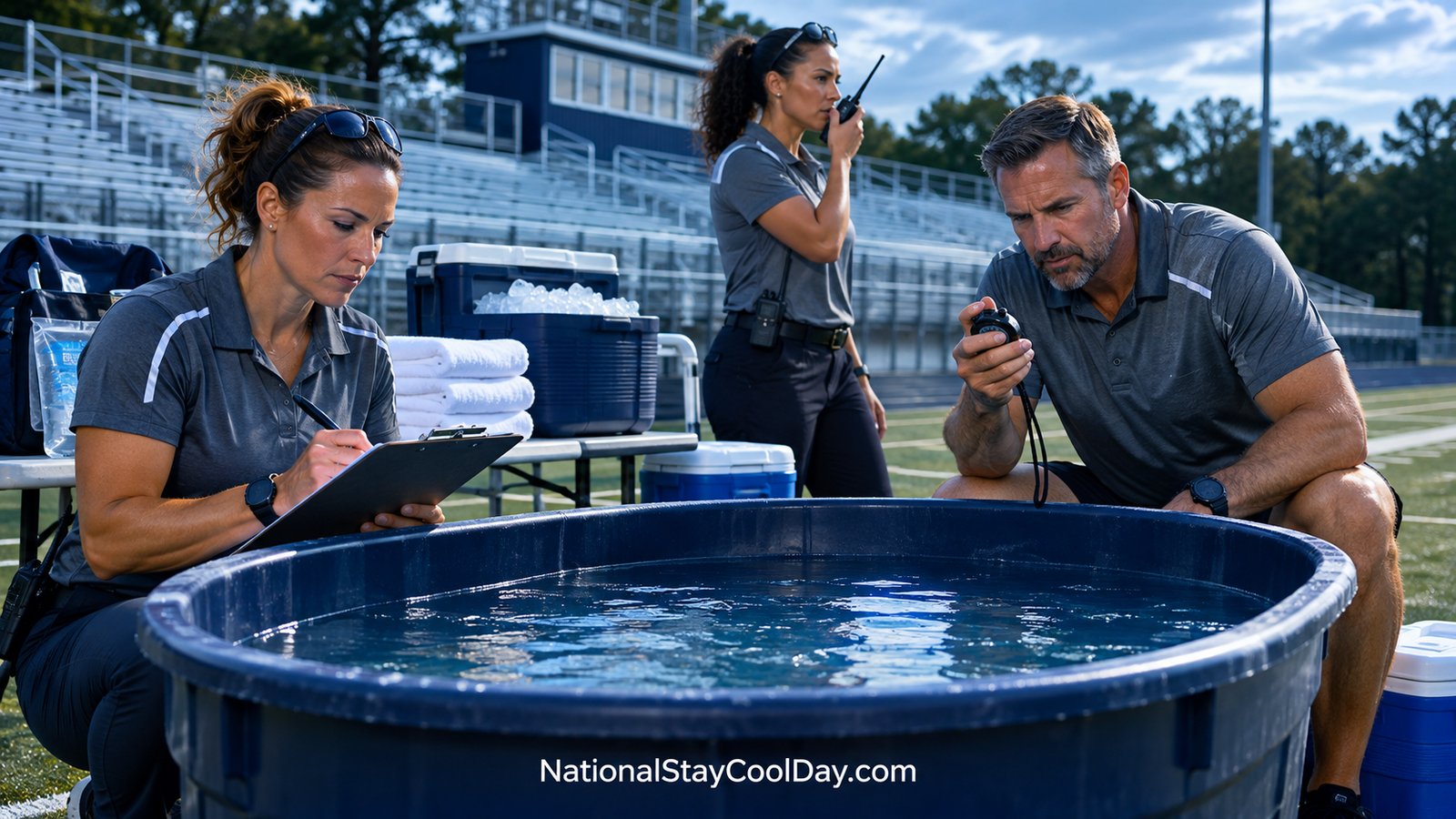
You may coach one position group, one age level or one station. Heat doesn't stay in your lane. If an athlete in your group goes down, the first minutes are yours, whether the head coach is across the field or at home that day.
Know your job in the emergency plan
- Ask the head coach which job you have when something goes wrong: calling 911, starting cooling, running for the AED, meeting the ambulance or keeping the rest of the team together.
- Learn a backup job too, in case the person assigned to it isn't at practice that day.
- Know where the emergency plan is posted at each practice site, and who your program's heat safety lead is.
- If your program holds a preseason staff heat meeting, be there. If it doesn't, ask for one.
When you run a group on your own
Position groups and split practices spread athletes across a campus. The head coach can't see every group, so you are the eyes on yours.
- Know how far your spot is from the cooling tub, and how you would get an athlete to it or bring it to the athlete.
- Carry a phone that works where you coach, and know the address or directions to give a 911 dispatcher.
- Give water breaks on the same schedule as the rest of the team, even when your drill is going well.
- Watch for an athlete who seems confused, stumbles, falls behind or stops acting like themselves. Stop them, keep them with you and get help. Never send a struggling athlete to walk back alone.
Help get the cooling setup ready
- Before athletes start, check that the cooling tub, water, ice, towels and shade are ready at your site.
- Know who brings the ice each day. If it's you, know where to get more when it runs low.
- Check the tub and the water jugs during practice, not only at the start.
The emergency steps every assistant should know
Exertional heat stroke is 100% survivable when cooling starts fast, on site. Whoever reaches the athlete first, the steps are the same:
- Call 911 and cool at the same time. One person calls while others start cooling.
- Start cooling within 10 minutes. Cold water with ice agitation, with the goal of about 102°F within 30 minutes. At 104°F the body loses its ability to regulate its own temperature.
- Cool first, transport second.
- Gear: remove anything you can quickly but don't delay cooling because of gear removal.
If you are the one cooling, keep going. Cooling on site before transport is the plan, not a delay.
The days you are in charge
Head coaches miss practice for meetings, illness and family. When that happens, the heat plan doesn't take the day off.
- Know the heat rules your program uses to change or stop practice, and follow them as written. Our page on writing a heat policy shows what those rules should cover.
- Check conditions at the field before practice, and write them down if your program keeps a daily heat log.
- Make sure at least one other adult on site knows the emergency steps.
- If the cooling setup isn't ready, don't start until it is.
Speak up
Assistants often notice things first: an athlete who looks off, a tub that wasn't filled, a gate that's locked. Tell the head coach right away. If something about the plan itself worries you, take it to the athletic director or the heat safety lead before the season starts.
New to coaching?
If this is your first season, start with our page for new coaches, then read the heat routine for every hot practice. Both apply to assistants as much as head coaches.
A quick check for assistant coaches
- Do I know my job in the emergency plan, and a backup job?
- How would I get an athlete in my group to the cooling tub?
- Does my phone work where I coach, and do I know the address?
- Do I know the emergency steps without looking them up?
- Would I know what to do on a day the head coach isn't there?
Where to go next
If something does happen, our page on what to do after a heat emergency covers the days that follow. For questions about the Council, contact us.
Take the next step: build your heat emergency action plan with the free National Stay Cool Day heat safety tools, then sign up your school for National Stay Cool Day on April 8, 2027. Both are free.