Player Safety Council / Heat safety lead
Heat safety lead
Your Program's Heat Safety Lead: One Person Who Keeps the Plan Working
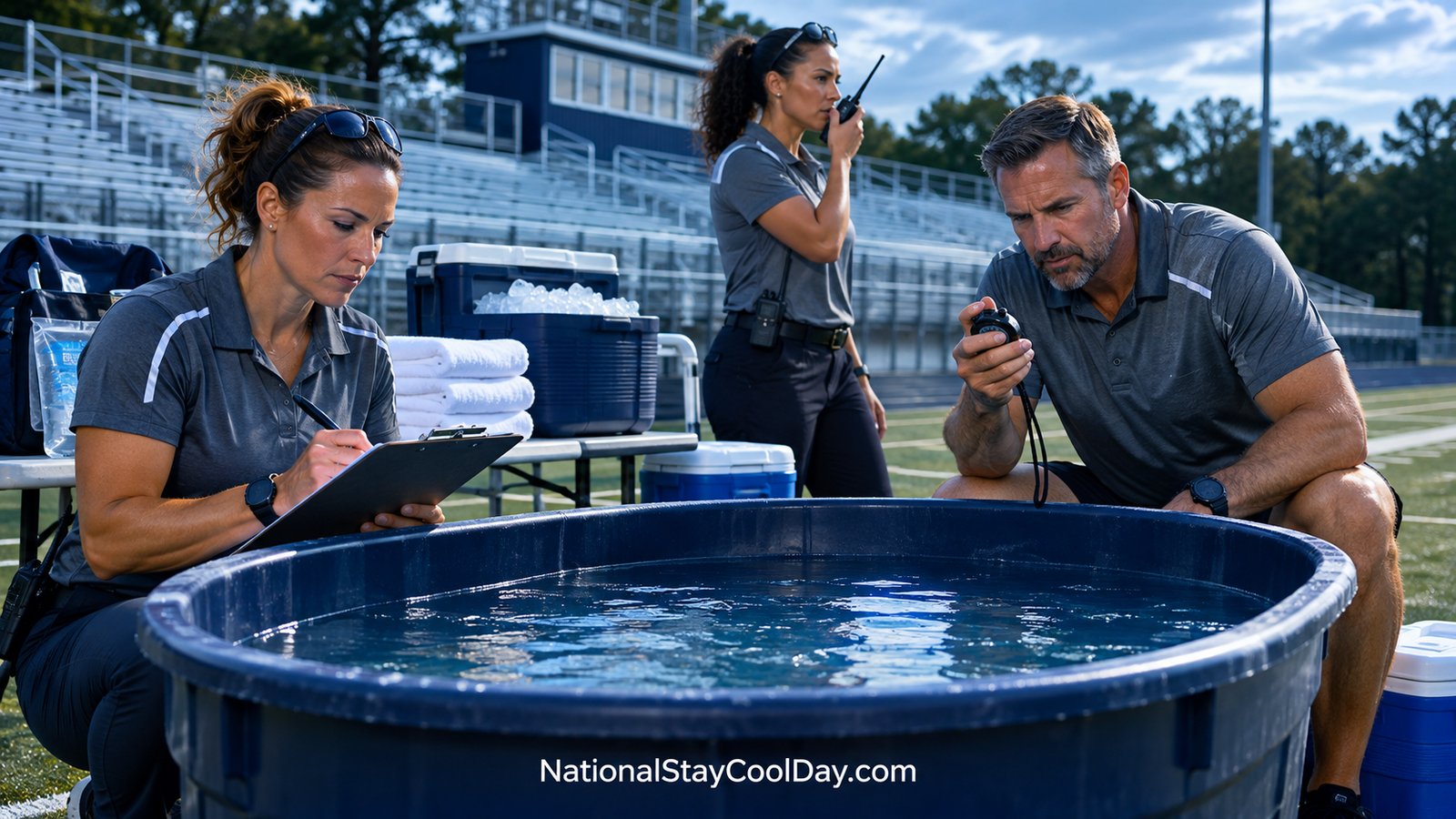
This is an organizing role, not a medical one. If your program has an athletic trainer or team physician, they lead the medical side of heat response. The heat safety lead makes sure the plan, the people and the equipment are ready so that response can happen fast.
Who should do it
- Someone who is at most practices and games, or who can check in with the people who are.
- Someone other coaches and staff will listen to when they say "the tub isn't ready, we don't start."
- Often an athletic director, head coach, club director, athletic trainer or a steady volunteer. The title matters less than the follow-through.
- Name a backup too. Heat emergencies don't wait for the lead to be on site.
Write both names into your written heat policy and share them with every coach and volunteer.
Before the season
- Read the heat plan start to finish and update anything that changed: fields, staff, phone numbers, addresses.
- Check the cooling setup at every site you use: tub, water source, ice plan, towels, shade. The preseason venue walkthrough covers what to look for.
- Run or schedule the preseason staff heat meeting so every coach hears the same plan.
- Make sure each team knows who calls 911, who starts cooling and who meets the ambulance.
- Set up how heat messages will reach families, using the heat communication plan.
On hot days
- Check the heat forecast and your program's rules for changing or cancelling practice, and make the call early.
- Confirm the cooling tub is filled and ice is on site before athletes start, not after someone gets sick.
- Make sure every practice has someone present who knows the emergency steps.
- Keep the daily heat log going, or make sure someone else does.
When people change
- Walk every new coach and volunteer through the plan before their first hot practice. The new coaches page is a good starting point.
- When a coach, trainer or key volunteer leaves, check what they were responsible for and hand it to someone by name. The staff changes page covers this.
- If the lead steps down, they hand off the role in person, with the plan, the log and the list of open items.
The emergency steps the lead keeps in front of everyone
Exertional heat stroke is 100% survivable when cooling starts fast, on site. The lead's biggest job is making sure every adult at every practice knows these steps:
- Call 911 and cool at the same time. One person calls while others start cooling.
- Start cooling within 10 minutes. Cold water with ice agitation, with the goal of about 102°F within 30 minutes. At 104°F the body loses its ability to regulate its own temperature.
- Cool first, transport second.
- Gear: remove anything you can quickly but don't delay cooling because of gear removal.
After a hot day or a close call
- Talk with the coaches involved while it is fresh. What worked, what was slow, what was missing?
- Fix the gap before the next hot day, not at the end of the season.
- If there was a heat emergency, follow what your program should do in the days that follow.
- At the end of the season, bring your notes to the end-of-season heat review.
A quick check for your program
- Does your program have one named heat safety lead, and a backup?
- Do all coaches and volunteers know who that person is?
- Has the lead checked the cooling setup at every site you use this season?
- Does every practice have an adult who knows the emergency steps?
- Is there a plan for handing off the role if the lead leaves?
Where to go next
The athletic director's checklist and the heat season calendar help a new lead see the whole year at once. For questions about the Council, contact us.
Take the next step: build your heat emergency action plan with the free National Stay Cool Day heat safety tools, then sign up your school for National Stay Cool Day on April 8, 2027. Both are free.