Player Safety Council / Season review
Season review
The End-of-Season Heat Review: Fix Next Year's Plan While This Year Is Fresh
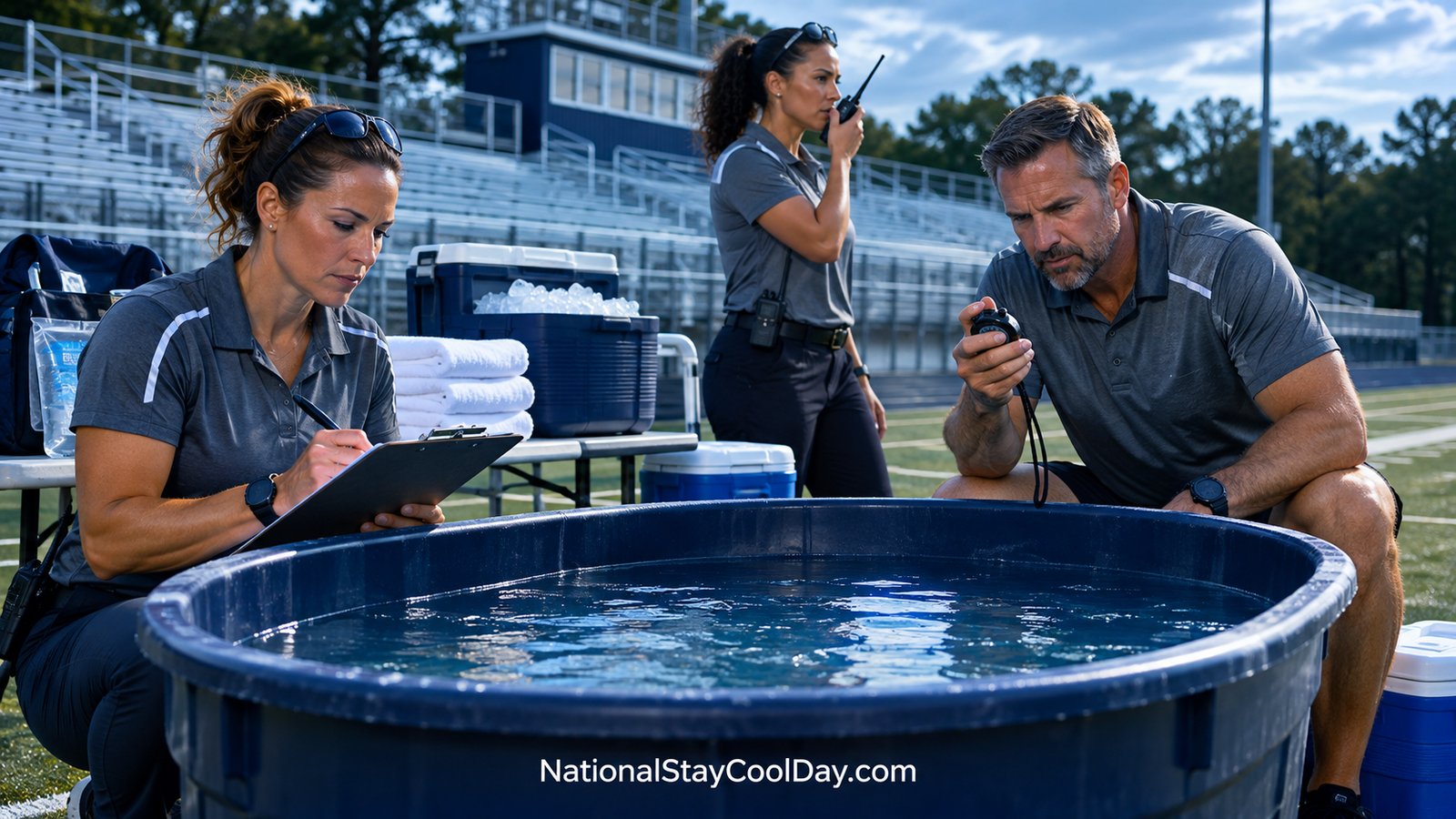
Your state association, school district or league may have its own rules for reviewing safety plans and keeping records. Follow those first. This page is about a simple review your staff will actually finish.
When to hold it
- Within two or three weeks of your last hot practice or game, before coaches move on to the next season.
- Put it on the calendar at the start of the season, so it isn't something you try to fit in later.
- Keep it to about an hour. A long meeting gets put off. A short one gets done.
Who should be in the room
- The athletic director or program leader who owns the heat plan.
- Head coaches from every team that practiced in the heat, plus any assistant who ran sessions on their own.
- The athletic trainer or school nurse, if your program has one.
- The person who handled ice, water and the tub at each venue, even if that was a volunteer.
If someone can't come, ask them for three things in writing: what worked, what got in the way, and one thing they would change.
What to bring
- This season's daily heat logs.
- Your drill records, including how long it took to get the tub ready.
- Your written heat policy and the emergency action plan for each venue.
- Any notes from a close call or a heat emergency. If you had one, the after a heat emergency guide covers the review that should already have happened.
Questions to work through
Go through these in order. Write down the answer to each one, even if the answer is "fine."
- Did every hot session have a heat reading? Look for gaps by team, by venue and by day of the week. Weekend and early-season sessions are where readings tend to go missing.
- Did the reading change anything? If a team never shortened or moved a practice, ask why. Maybe it never needed to. Maybe nobody felt they could make the call.
- Was the tub filled and ready before every session? Count the days it wasn't, and find out what got in the way: no ice, no water source, no one assigned.
- Did ice show up when it was supposed to? Note which days and which venues ran short.
- Did every venue have a drill? Note which venues and which staff were never part of one.
- Did anyone get pulled out for heat? Without sharing athletes' health details, go through what staff saw, what they did and how long each step took.
- Did families and athletes know how heat calls were made? Note any confusion about changed or cancelled practices.
- Who is leaving? If a coach, trainer or volunteer with a heat role won't be back, the staff changes page covers how to hand that role off.
Turn it into a short fix list
- Keep it to one page. Each fix gets one line: what needs to change, who owns it and when it will be done.
- Put the fixes that need money first, so they make it into next year's budget.
- Update your heat policy and venue plans now, not next spring.
- Add the fixes to the agenda for next year's preseason staff heat meeting, so the whole staff hears what changed.
- File the list with your heat logs, so the next person in the job can see it.
Check the cooling order is still right
Exertional heat stroke is 100% survivable when cooling starts fast, on site. Before you close the review, read the cooling order out loud and make sure every venue plan says the same thing:
- Call 911 and cool at the same time. One person calls while others start cooling.
- Start cooling within 10 minutes. Cold water with ice agitation, with the goal of about 102°F within 30 minutes. At 104°F the body loses its ability to regulate its own temperature.
- Cool first, transport second.
- Gear: remove anything you can quickly but don't delay cooling because of gear removal.
A quick check of your review
- Did someone from every team that practiced in the heat take part?
- Did you read the heat logs and drill records, not just talk from memory?
- Does every fix have an owner and a date?
- Are the fixes that cost money on the budget list?
- Is the fix list filed where next year's staff will find it?
Where to go next
The heat season calendar shows where this review fits in the year, and the athletic director's checklist covers the rest of the season. The free National Stay Cool Day EAP builder can help you update the emergency action plan for each venue. For questions about the Council, contact us.