Player Safety Council / Bus drivers
Bus drivers
For Bus Drivers and Transportation Staff: Your Part in a Hot Day for the Team
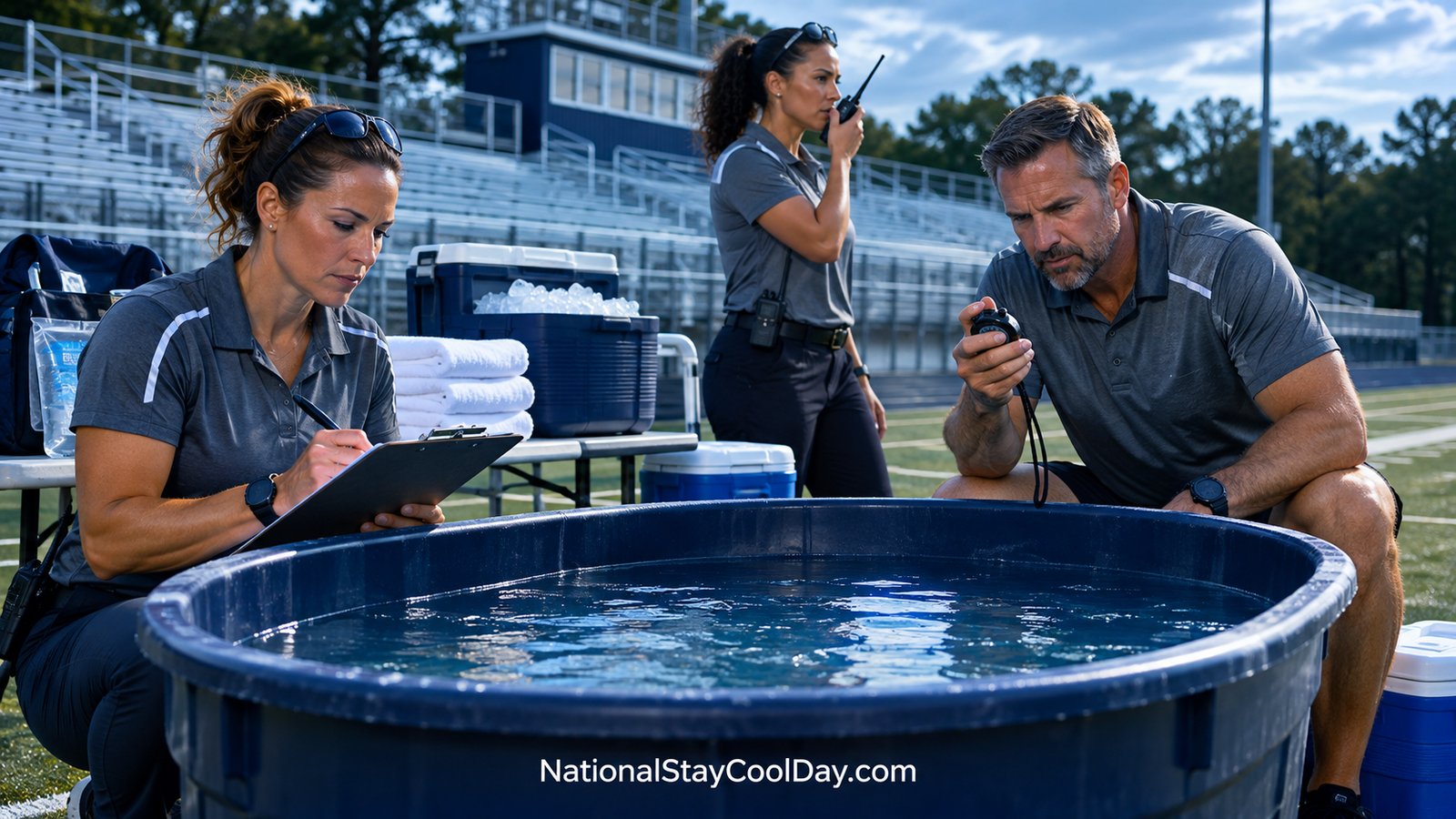
A heat emergency doesn't always happen in the middle of a game. An athlete who struggled late in a hot contest can still be in trouble in the parking lot or on the ride home. When that happens, the people around the bus are the first ones there.
Before the trip
- Know which coach or staff member is in charge on your bus, and how to reach them during the game.
- Have the address of the venue, the exact spot where you will park and the way an ambulance would get to you.
- Ask the coach whether the team's cooling setup is coming along: the cooling tub, ice, water and towels. If it rides on your bus, know where it is loaded.
- Carry a phone that works where you are going, and know how to reach your transportation office.
- If your program holds a preseason staff heat meeting, ask to sit in or to get the notes.
Waiting at a hot venue
Drivers often wait for hours at a field, track or course with little shade. Take care of yourself first. Drink water, find shade when you can and don't sit in a closed, parked bus in the sun.
- Know where the team's cooling tub is set up at the venue, so you can send help or bring an athlete there.
- Follow your district's rules on running the bus while parked. A cool bus can be a place to rest out of the sun, but it is not a treatment for heat stroke.
- Never leave an athlete alone on the bus to "cool off." An athlete who needs to sit out needs an adult watching them.
Signs to watch for as athletes board
You see every athlete up close at the bus door. Watch for someone who seems confused, stumbles, can't answer simple questions, collapses or just isn't acting like themselves. Don't wave them on board and hope they sleep it off. Stop, keep them with you and get the coach right away.
The emergency steps every driver should know
Exertional heat stroke is 100% survivable when cooling starts fast, on site. Whoever reaches the athlete first, the steps are the same:
- Call 911 and cool at the same time. One person calls while others start cooling.
- Start cooling within 10 minutes. Cold water with ice agitation, with the goal of about 102°F within 30 minutes. At 104°F the body loses its ability to regulate its own temperature.
- Cool first, transport second.
- Gear: take off whatever gear comes off quickly but never delay cooling for gear removal.
That third step matters most for drivers. It can feel natural to load a sick athlete on the bus and race to the hospital. Don't. Driving away from the cooling tub takes away the minutes that count. Cooling on site before transport is the plan, not a delay.
If it happens on the road
- Pull over where it is safe and tell the coach on board.
- Call 911 and give your exact location. Then call your transportation office.
- Start cooling with whatever cold water and ice the team has with them while help is on the way.
- If you are still close to the venue, the cooling tub there may be the fastest way to cool. Let the coach and the 911 dispatcher help decide.
- Keep the rest of the team calm and on the bus unless it is safer to get off.
Help the plan work
Drivers and transportation offices can make the heat plan easier for everyone. Leave room for the cooler and tub when you plan seating. Let coaches know early about any delays that keep a team waiting outside in the heat. When a visiting team is coming to your campus, share where buses park so the host knows where to meet them. Our page on hosting visiting teams covers what the host school should have ready.
Speak up
If you notice something, say something. A team that left without its ice, an athlete who looked off getting on the bus or a long wait with no shade are all worth telling the coach. If something about the plan worries you, take it to your transportation supervisor, the athletic director or your program's heat safety lead.
A quick check for drivers and transportation staff
- Do I know who is in charge on my bus and how to reach them?
- Do I know where the team's cooling tub is at this venue?
- Does my phone work here, and do I know the exact address to give 911?
- Do I know the emergency steps without looking them up?
- Would I know not to drive off with an athlete who needs cooling first?
Where to go next
Coaches can find the full heat routine for every hot practice, and our page on heat communication covers how staff stay in touch on hot days. If something does happen, our page on what to do after a heat emergency covers the days that follow. For questions about the Council, contact us.
Take the next step: build your heat emergency action plan with the free National Stay Cool Day heat safety tools, then sign up your school for National Stay Cool Day on April 8, 2027. Both are free.