Player Safety Council / Human resources and hiring staff
Human resources and hiring staff
For Human Resources and Hiring Staff: Building the Heat Plan Into Coach Hiring and Onboarding
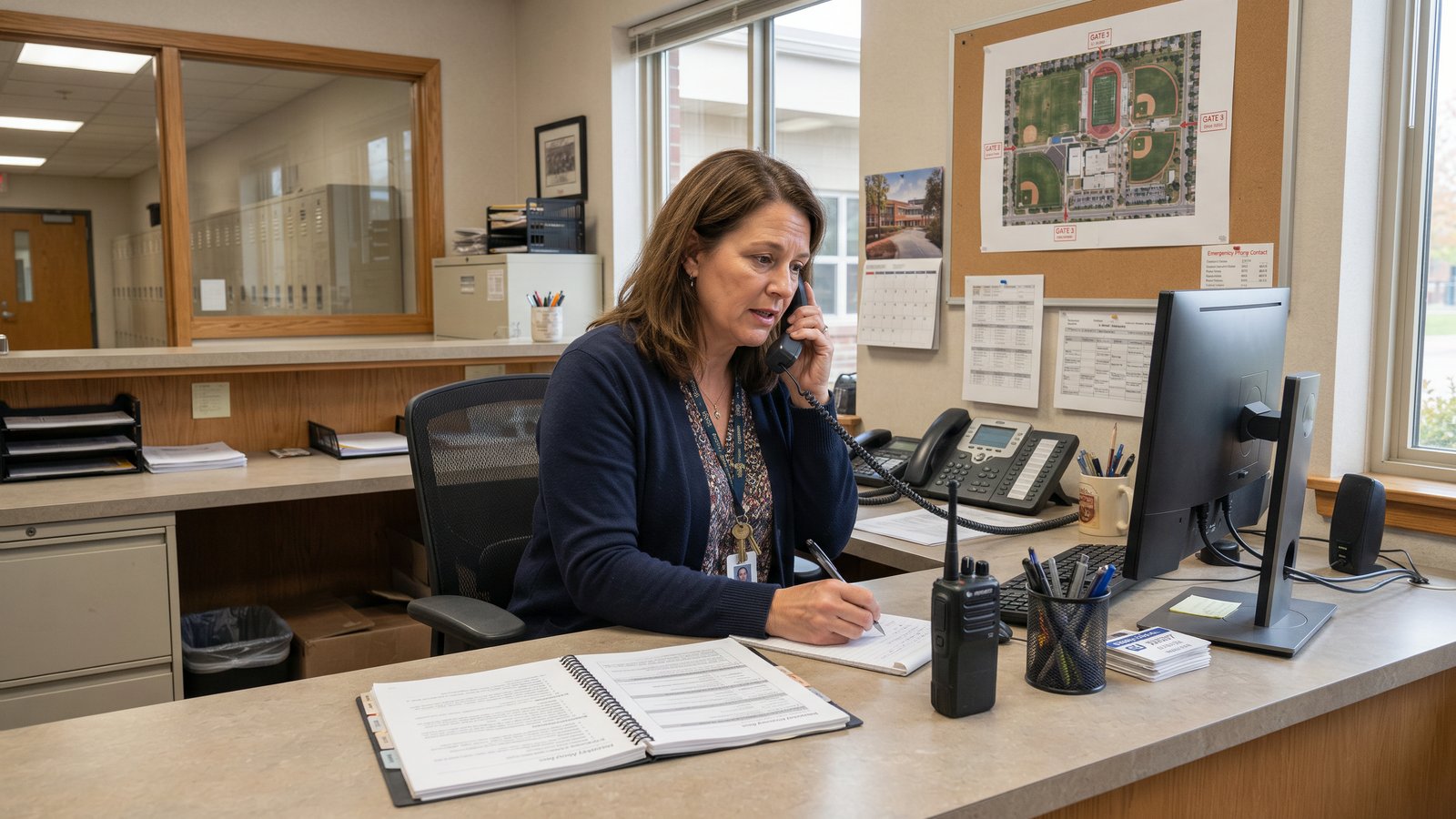
You do not need to run a cooling tub or make the heat call. Your athletic director, athletic trainer and heat safety lead own the plan itself. Your part is making sure every person hired to work with athletes is told about the plan, walked through it and recorded as ready before their first day with a team.
Know what new staff need to learn
Every new coach should leave onboarding knowing where the written plan is, who makes the heat call and where the cooling tub sits at each site they will work. Exertional heat stroke is 100% survivable when cooling starts fast, on site. These are the steps every adult on the sideline should know:
- Call 911 and cool at the same time. One person calls while others start cooling.
- Start cooling within 10 minutes. Cold water with ice agitation, with the goal of about 102°F within 30 minutes. At 104°F the body loses its ability to regulate its own temperature.
- Cool first, transport second.
- Gear: take off whatever gear comes off quickly but never delay cooling for gear removal.
Put heat safety in the job description
If the heat plan is not written into the role, it is easy for a new hire to see it as someone else's job. Add a plain line to job descriptions for head coaches, assistant coaches, strength staff and camp workers saying the person is expected to learn and follow the program's heat plan.
- Job postings: list following the heat and emergency action plans as a duty of the role.
- Offer letters: note that heat plan training is part of onboarding and happens before the first practice.
- Interviews: ask how the candidate has handled hot practices before, and listen for whether they mention cooling on site.
Make the heat plan part of day one
New hire packets usually cover keys, payroll and building rules. Add the heat plan to that packet. Include the written heat policy, the emergency action plan for each venue the person will use and the name of who to ask with questions. Then set a time, before they work a practice, for someone to walk them to the cooling tub and through the plan in person. Our page for new coaches lists the questions every new coach should be able to answer before day one, and it works well as a handout in the packet.
Plan for summer and seasonal hires
Summer camp staff, part-time assistants and coaches hired a week before the season often skip the normal onboarding schedule. They are also the people most likely to be on a field in the worst heat. Build a short version of heat plan onboarding that can be done quickly, and make it a condition of starting work, not something to finish later. Check your heat season calendar and work backward so seasonal hires are trained before summer workouts and camps begin. If your program runs camps, our camp directors page covers the camp side of the plan.
Include volunteers and outside staff
Not everyone on the sideline goes through human resources. Parent volunteers, club coaches using your fields and contract staff may never get a new hire packet. Work with your athletic director to decide how those people learn the plan too. Our pages for team volunteers and outside groups can be shared with them directly.
Keep a record that is easy to check
Keep a simple record of who has been walked through the heat plan and when. It does not need special software. A list with each person's name, role, the date they were trained and who trained them is enough for an athletic director to see who still needs it. Your risk manager may also want to see it. Any state, district or league rules about required staff training should come first, so ask your governing body what applies to you.
Add the plan to the exit checklist
When a coach or trainer leaves, ask what they did for heat safety that is not written down, and pass it to whoever takes over. Collect it the same way you collect keys and uniforms. Our staff changes page walks through how to keep the plan working after people leave.
A quick check for hiring staff
- Do job descriptions for coaching and camp roles mention the heat plan?
- Does every new hire packet include the heat policy and venue emergency plans?
- Is each new hire walked through the plan in person before their first practice?
- Do summer and late hires get trained before they start, not after?
- Is there a record of who has been trained and when?
- Does the exit checklist ask about heat safety duties?
Where to go next
Share this page with your athletic director and plan to bring new hires to your preseason staff heat meeting. Our heat safety resources page lists more tools. For questions about the Council, contact us.
Take the next step: build your heat emergency action plan with the free National Stay Cool Day heat safety tools, then sign up your school for National Stay Cool Day on April 8, 2027. Both are free.