Player Safety Council / Risk managers and safety officers
Risk managers and safety officers
For Risk Managers and Safety Officers: Reviewing Your Program's Heat Plan Before the Hot Months
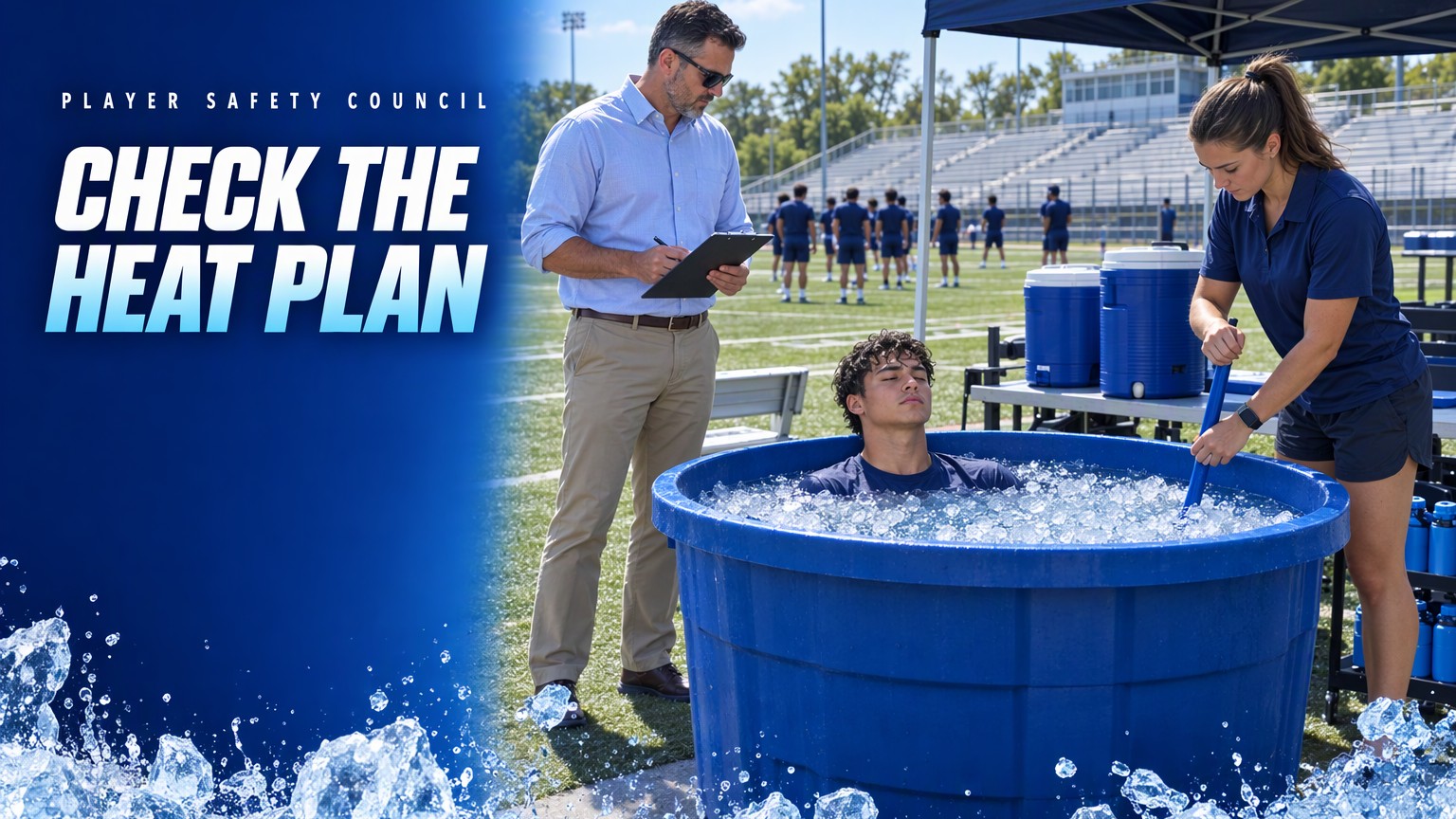
Coaches and athletic trainers carry out the heat plan. Your part is to make sure the plan exists, that it is realistic for every site your athletes use and that someone checks it each season. You do not need medical training to do that well. You need to know what a good plan includes and to ask plain questions until the answers are clear.
Start with the written plan
- Ask to see the program's written heat policy and its emergency action plan. Check that both are dated, signed and current for this season.
- Confirm the plan covers every site: home fields, gyms, practice fields away from the main campus and any rented or shared space. Our page on outside groups on your fields covers sites other people use too.
- Look for a named heat safety lead, so one person owns the plan and keeps it working.
- Check that the plan names who calls 911, who starts cooling and who meets the ambulance, and that each field's street address is written in.
The emergency steps the plan should match
Exertional heat stroke is 100% survivable when cooling starts fast, on site. When you read a program's plan, check that it lines up with these steps:
- Call 911 and cool at the same time. One person calls while others start cooling.
- Start cooling within 10 minutes. Cold water with ice agitation, with the goal of about 102°F within 30 minutes. At 104°F the body loses its ability to regulate its own temperature.
- Cool first, transport second.
- Gear: take off whatever gear comes off quickly but never delay cooling for gear removal.
If a plan says to wait for the ambulance before cooling, or to send the athlete away before cooling starts, that is the first thing to fix.
Walk the site, not just the paperwork
A plan can read well and still fall apart at the field. Visit on a practice day if you can. Our preseason venue walkthrough is a good checklist to bring along.
- Is a cooling tub at the field, with water and ice ready, before practice starts?
- Is there shade nearby, and a clear path for an ambulance to reach the field?
- Does the staff on site know where the tub and ice are without asking?
- Who keeps the supplies stocked? Our page for equipment managers walks through that job.
Training and practice
A plan only works if the people at the field have practiced it. Ask whether the staff ran through the emergency steps together before the season, for example at a preseason staff heat meeting. Ask how new coaches and volunteers learn the plan when they join partway through the year. Our page on when staff changes explains why this is where plans most often slip.
Records worth keeping
Good records help a program learn and show that the plan was followed. Ask whether the program keeps a daily heat log on hot days, notes any time cooling was used and holds an end-of-season heat review. If an emergency does happen, our page on the days after a heat emergency covers what a program should do next.
Questions about rules, coverage and liability
Requirements for heat plans, cooling equipment and staff training differ by state, by association and by insurance policy. This page does not give legal or insurance advice. Bring those questions to your state association, your carrier and your legal counsel, and write their answers into the plan so the next person in your role can find them.
A quick check for risk managers and safety officers
- Is there a current, signed heat plan and emergency action plan for every site?
- Does the plan say to call 911 and cool at the same time, and to cool first, transport second?
- Is a cooling tub with water and ice at the field before every hot practice?
- Has the staff practiced the emergency steps together this season?
- Does one named person own the plan?
- Are heat logs and the season review being kept?
Where to go next
Share this page with your athletic directors and league directors, and review the plan with them before the first hot practice. District leaders may also want our page for superintendents, and league boards our page for board members. For questions about the Council, contact us.
Take the next step: build your heat emergency action plan with the free National Stay Cool Day heat safety tools, then sign up your school for National Stay Cool Day on April 8, 2027. Both are free.