Player Safety Council / District leaders
District leaders
For Superintendents and District Leaders: One Heat Plan for Every School
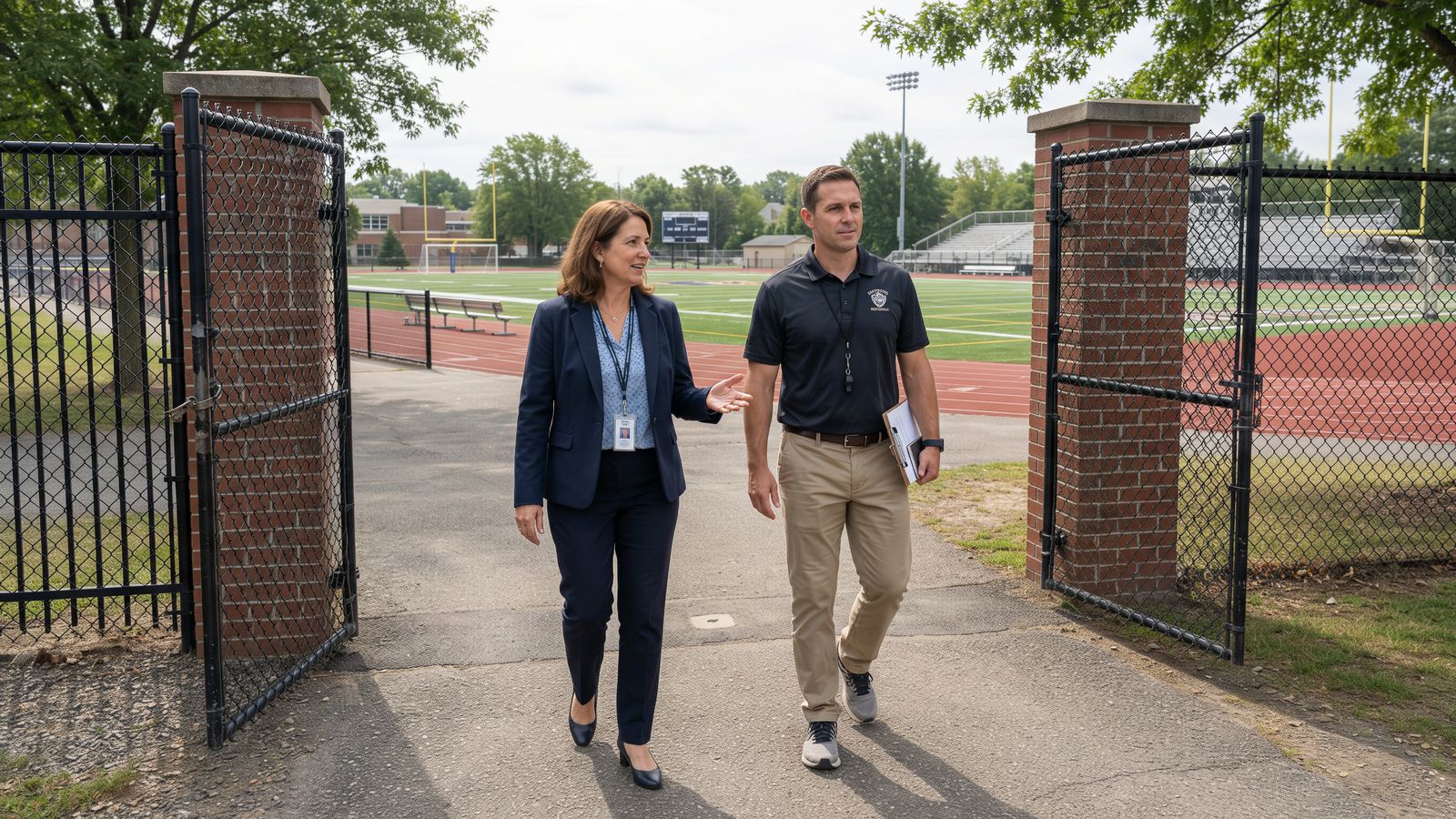
Coaches and athletic trainers run the response to a heat emergency. Principals and athletic directors make it work on each campus. The district decides whether every campus starts from the same plan, with the same gear and the same training, or whether each school is left to figure it out alone.
Start with one written plan
- Ask for a copy of the heat policy at each of your schools and read them side by side. If they say different things, that is the first thing to fix. Our page on writing a heat policy shows what a good one covers.
- Agree on one district plan that every school follows, then let each campus add its own fields, gates and phone numbers.
- Make sure the plan covers middle schools, not just high schools. Our page on middle school sports explains why younger teams need it too.
- Ask each school to name a heat safety lead and a backup, and keep that list at the central office.
Make the gear the same at every campus
Every practice site should have a cooling tub, water, ice, towels and shade ready before athletes start. If that is left to each booster club or each coach to pay for, the schools with the least money can end up with the least protection.
- Find out which schools have a cooling tub at every practice site and which don't.
- Ask who pays for ice at each school, and whether the district can cover it so no team goes without.
- Check that coaches can get ice after hours, on weekends and in the summer, when the building is closed.
Train everyone at the same time
A plan only works if the people on the field know it. When each school trains on its own schedule, some staff get missed.
- Put heat training on the district calendar before summer workouts begin, for head coaches, assistants, volunteer coaches and anyone else who runs a practice. A preseason staff heat meeting is a good model for each school.
- Ask each school to run the emergency drill on its own fields and report back that it happened.
- Plan for coaches who are hired midseason. Our page on staff changes covers how to keep the plan working when people leave.
The emergency steps every district leader should know
Exertional heat stroke is 100% survivable when cooling starts fast, on site. You will almost never be the one at the tub, but every adult in your district who works with athletes should know that the right response is to:
- Call 911 and cool at the same time. One person calls while others start cooling.
- Start cooling within 10 minutes. Cold water with ice agitation, with the goal of about 102°F within 30 minutes. At 104°F the body loses its ability to regulate its own temperature.
- Cool first, transport second.
- Gear: take off whatever gear comes off quickly but never delay cooling for gear removal.
Back your coaches and athletic trainers when they follow these steps. Cooling on site before transport is the plan, not a delay. If anyone in your district has been told to load an athlete into a car or wait for the ambulance before cooling, that needs to change.
Fields, summers and outside groups
District fields are busy year round. Summer workouts, camps, rec leagues and club teams may all use them when no school staff are around.
- Know which groups use district fields in the summer and who is in charge of each one.
- Make sure every field has an address or clear directions a caller can give to 911, and that ambulance gates can be opened.
- When outside groups use your fields, ask how they handle heat. Our page on outside groups has the questions to ask.
- Invite local EMS to walk your campuses before the season. Our page for EMS and first responders explains what they look for.
One message to families
Families should hear the same heat plan no matter which school their child attends. Send it through district channels, and in the languages your families speak. See our pages on heat communication and heat safety in every language.
Check in during the season and after it
Ask each school to keep a simple heat log of hot days, changes to practice and any time the cooling tub was used. At the end of the season, look at what went well and what didn't. Our end-of-season heat review walks through it. If an emergency does happen, our page on what to do after a heat emergency covers the days that follow.
A quick check for district leaders
- Does every school in the district follow the same written heat plan?
- Does every practice site, including middle schools, have a cooling tub, water, ice and shade?
- Do I know who pays for ice at each school?
- Have all coaches been trained before summer workouts?
- Do I know the heat safety lead at each school?
- Do I know the emergency steps without looking them up?
Where to go next
Share our pages for principals and athletic directors with the people who run each campus, and our page for school nurses with your health services staff. For questions about the Council, contact us.
Take the next step: build your heat emergency action plan with the free National Stay Cool Day heat safety tools, then sign up your school for National Stay Cool Day on April 8, 2027. Both are free.