Player Safety Council / Equipment managers
Equipment managers
For Equipment Managers: Keeping the Cooling Tub, Ice and Supplies Ready for Every Practice
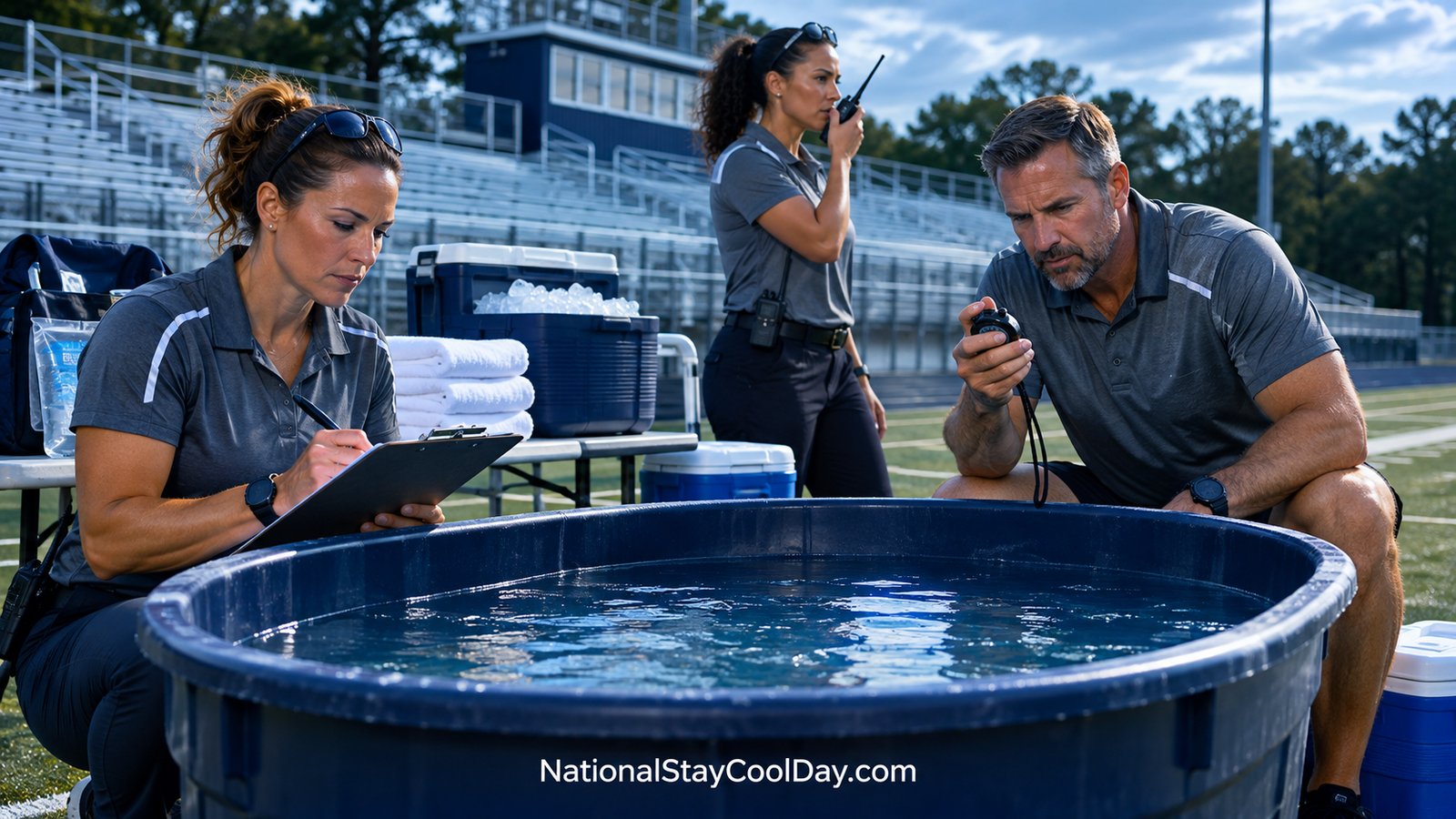
Coaches and athletic trainers run the response to a heat emergency. But they can only use what is on the sideline. If the tub is still in the storage room, the hose is missing or the ice ran out at lunch, the plan falls apart before it starts. Your work happens before anyone needs it, and that is exactly why it matters.
Know what belongs at every practice site
- A cooling tub big enough for an athlete, set up in the shade close to where the team practices.
- Water to fill it, and a way to get that water there, such as a hose that reaches or a plan to fill it ahead of time.
- Enough ice to cool the water and to replace what melts during practice.
- Towels, water for drinking, shade and a working phone or radio.
Ask your athletic trainer or head coach to walk through this list with you once, at the actual field, so you both agree on what goes where. Our preseason venue walkthrough is a good time to do it.
Make setup part of the daily routine
A tub that only comes out on the hottest days is a tub that won't be there on the day it is needed. Treat it like any other piece of practice gear.
- Set up the tub, ice and towels before athletes take the field, not after the first water break.
- Keep a short checklist on the equipment room door and check it off each day.
- Check the ice partway through long practices and add more if it is running low.
- Know who sets up when you are out sick, on vacation or at another field. Write their name next to yours.
Plan for ice
Ice is the supply programs run out of most often. Find out where it comes from and what happens when the usual source is empty.
- Know how much ice a normal hot practice uses, and keep extra on the busiest days.
- Know where the ice machine or freezer is, who has the key and whether you can get in after hours, on weekends and in the summer.
- Have a backup plan if the machine breaks, such as a nearby store and someone who can make the run.
- If ice costs money your program doesn't have, tell your athletic director. Our page for booster clubs and parent organizations covers how families can help.
Take care of the tub
- Check for cracks and leaks before the season and after it has been moved.
- Drain and clean it the way your athletic trainer asks, and let it dry before it goes back in storage.
- Keep it in a spot where it can be moved to the field quickly, not behind other gear.
- If there is more than one practice site, make sure each one has what it needs, or a clear plan for moving it.
The emergency steps every equipment manager should know
Exertional heat stroke is 100% survivable when cooling starts fast, on site. You may not be the one at the tub, but you are often the reason it is there and ready. Everyone who works with athletes should know that the right response is to:
- Call 911 and cool at the same time. One person calls while others start cooling.
- Start cooling within 10 minutes. Cold water with ice agitation, with the goal of about 102°F within 30 minutes. At 104°F the body loses its ability to regulate its own temperature.
- Cool first, transport second.
- Gear: take off whatever gear comes off quickly but never delay cooling for gear removal.
If there is an emergency, your job may be to bring more ice, more towels or more water, keep the path to the tub clear or meet the ambulance at the gate. Ask your coaches now which of those jobs is yours.
Game days, away games and visiting teams
- On home game days, set up the tub for your team and make sure the visiting team knows where it is. Our page on hosting visiting teams has more.
- For away games, ask the host school what cooling setup will be there. If the answer is unclear, pack what your team needs. Our page for bus drivers and transportation staff covers the trip itself.
- For summer camps and tournaments, plan for longer days and more ice than a normal practice.
Write it down
Note in the daily heat log when the tub was set up, when ice ran low and anything that broke. At the end of the season, bring those notes to the end-of-season heat review so next year's supply list and budget are better. If an emergency does happen, our page on what to do after a heat emergency covers the days that follow.
A quick check for equipment managers
- Is a filled cooling tub at every practice site before athletes start?
- Do I know where the ice comes from, and what to do if it runs out?
- Can I get into the ice machine or freezer after hours and in the summer?
- Does someone else know how to set up when I'm not there?
- Do I know my job if an athlete goes down?
- Do I know the emergency steps without looking them up?
Where to go next
Share this page with your heat safety lead and bring it to your preseason staff heat meeting. Our pages for coaches and facility and grounds managers cover the people you work with most. For questions about the Council, contact us.
Take the next step: build your heat emergency action plan with the free National Stay Cool Day heat safety tools, then sign up your school for National Stay Cool Day on April 8, 2027. Both are free.