Player Safety Council / Youth sports boards
Youth sports boards
For Youth Sports Boards: The Heat Safety Questions to Ask Before Summer
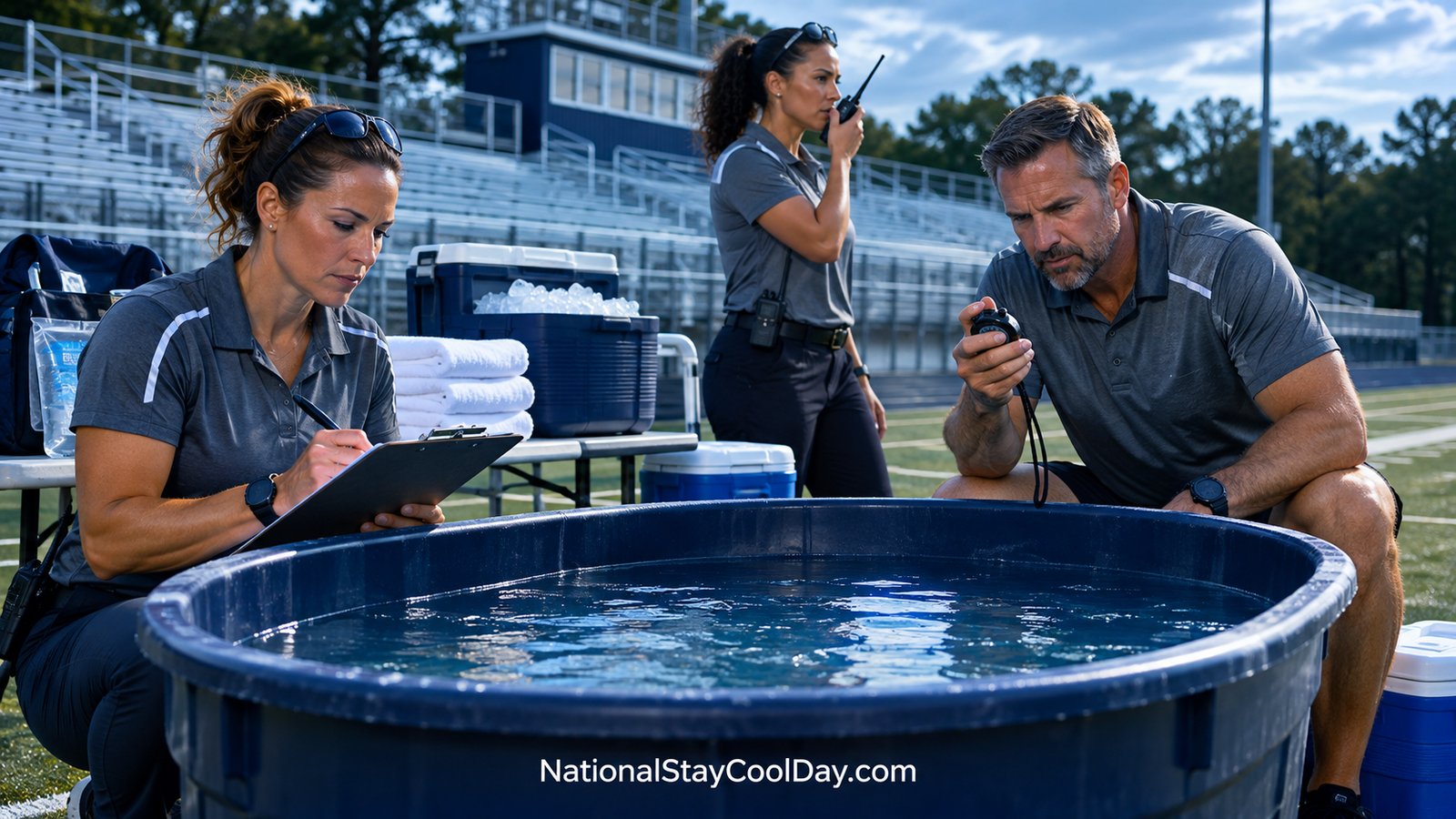
A board's job here is to ask and to follow up, not to run the emergency response. Coaches, athletic trainers and staff on site handle that. The board makes sure they have the plan, the people and the equipment to do it.
Questions about the plan
- Do we have a written heat policy? When was it last updated?
- Does it say who decides to change or cancel practice on a hot day, and how that call reaches families?
- Does every team, at every site we use, follow the same plan?
- Is there one named heat safety lead, and a backup, who keeps the plan working all season?
Questions about people
- Do all coaches and volunteers go over the heat plan before their first hot practice?
- Is there an adult at every practice and game who knows the emergency steps?
- When a coach or key volunteer leaves, who makes sure their part of the plan is handed off? The staff changes page covers this.
- Do families get heat messages they can read, including families who speak another language at home? See heat safety in every language.
Questions about equipment
- Does every site we use have a cooling tub, a water source, an ice plan, towels and shade?
- Who fills the tub and brings the ice before athletes start, and who checks that it happened?
- Is the cost of cooling equipment and ice in this year's budget, or is it left to each coach?
- If we rent or share fields, does the host site have what we need, or do we bring it? The preseason venue walkthrough helps answer this.
The emergency steps every board member should know
Exertional heat stroke is 100% survivable when cooling starts fast, on site. A board can't do this from a meeting room, but it can make sure every team is ready to:
- Call 911 and cool at the same time. One person calls while others start cooling.
- Start cooling within 10 minutes. Cold water with ice agitation, with the goal of about 102°F within 30 minutes. At 104°F the body loses its ability to regulate its own temperature.
- Cool first, transport second.
- Gear: remove anything you can quickly but don't delay cooling because of gear removal.
Put it on the calendar
- Before the season: review the heat policy and the equipment list, and confirm the heat safety lead. The heat season calendar lays out the timing.
- During the season: ask for a short heat update at each meeting. Were there close calls? Is anything missing at any site?
- After a heat emergency: follow what your program should do in the days that follow.
- After the season: ask for the end-of-season heat review and fund what it says needs fixing.
A quick check for your board
- Could any board member name our heat safety lead today?
- Has someone checked the cooling setup at every site we use this year?
- Is cooling equipment a line in the budget?
- Does the heat plan come up at our meetings during the hot months?
Where to go next
Boards that also oversee schools or leagues may want the athletic director's checklist and the page for booster clubs and parent organizations. For questions about the Council, contact us.
Take the next step: build your heat emergency action plan with the free National Stay Cool Day heat safety tools, then sign up your school for National Stay Cool Day on April 8, 2027. Both are free.