Player Safety Council / Event staff
Event staff
For Game Day Event Staff: Your Part in the Heat Plan at the Gate, the Stand and the Press Box
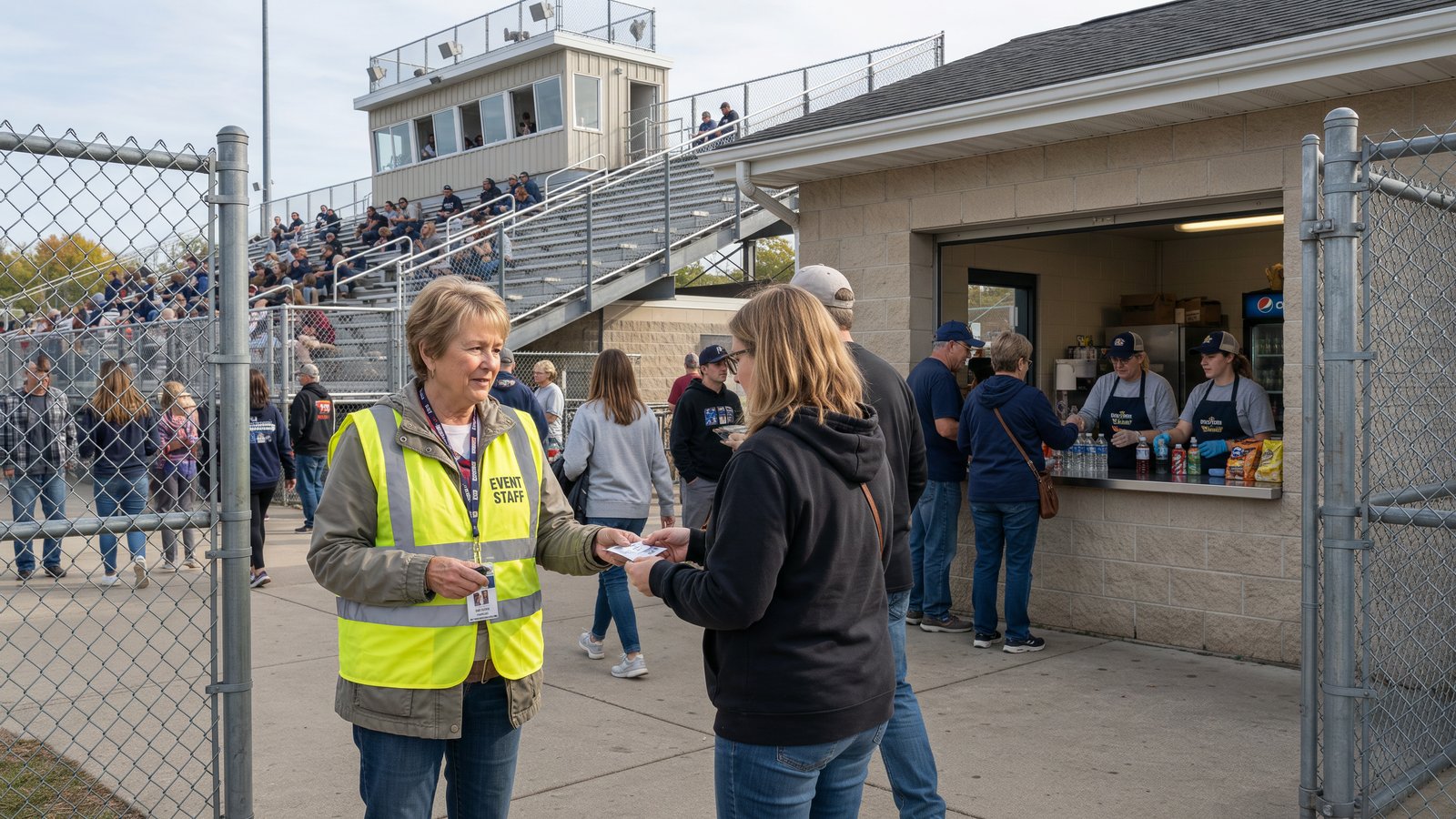
Coaches and medical staff on the sideline lead the response to a heat emergency. But the help they need often comes from someone at the gate, in the stand or up in the press box. A quick call, an open gate or a clear announcement can save minutes.
Before the gates open
- Know who is in charge of the heat plan today. That might be the athletic trainer, the head coach, the game manager or your program's heat safety lead. Know their name and how to reach them.
- Know where the cooling tub is set up and how to get there from your post.
- Know the exact address of the venue and which gate an ambulance would use. If that gate is locked, know who has the key and keep them close.
- Ask how staff will talk to each other during the game: radio channel, group text or phone numbers. Our page on heat communication covers what a good setup looks like.
- If your program holds a preseason staff heat meeting, ask to sit in.
Take care of yourself and your crew
Event staff work long shifts on hot pavement, in closed ticket booths, over grills and in stuffy press boxes. Drink water through your shift, not just at the end. Take breaks out of the sun, and trade off with another worker when you can. If you start to feel dizzy, sick or confused, tell someone and stop working. You can't help anyone else if you go down too.
What each post can do
Gate and parking staff. Keep the ambulance route clear all game. That means no parked cars, carts or tables blocking the gate or the drive to the field. If 911 is called, someone should go to the gate and wave the ambulance in, then walk the crew to the athlete.
Concession workers. Know where the team's ice supply is kept and who to tell if it runs low. If staff ask for ice or cold water during an emergency, hand it over fast. Ice from a concession stand can help in a pinch, but it is not a substitute for the cooling tub and ice the team should already have ready.
Announcers and press box staff. You see the whole field and you have the microphone. Know the plan for calling medical staff to a spot. Keep announcements calm and short, and never name or describe an athlete who is being treated. If you see a problem the sideline hasn't noticed, use the radio or phone first.
Clock, scoreboard and chain crews. You are right on the field or the sideline. Watch the athletes near you. If someone looks wrong, tell the nearest official, coach or athletic trainer right away. See our page for officials too.
Signs to watch for
Watch for an athlete who seems confused, stumbles, can't answer simple questions, collapses or just isn't acting like themselves. An athlete sitting alone by the fence or the stand needs an adult with them. Don't assume they are just tired. Get the coach or athletic trainer right away.
The emergency steps every event staff member should know
Exertional heat stroke is 100% survivable when cooling starts fast, on site. You may not be the one doing the cooling, but you should know the steps so you can help them happen:
- Call 911 and cool at the same time. One person calls while others start cooling.
- Start cooling within 10 minutes. Cold water with ice agitation, with the goal of about 102°F within 30 minutes. At 104°F the body loses its ability to regulate its own temperature.
- Cool first, transport second.
- Gear: take off whatever gear comes off quickly but never delay cooling for gear removal.
For event staff, the most useful jobs are simple. Make the 911 call if asked. Give the exact address and gate. Send someone to meet the ambulance. Bring more ice. Keep the crowd back so the staff can work. And understand why the athlete stays in the tub before the ambulance leaves. Cooling on site before transport is the plan, not a delay.
When the crowd is part of it
Fans and families can get sick in the heat too. Follow your event's plan for anyone in the stands, and call 911 when in doubt. During an athlete emergency, help keep parents and fans calm and out of the way of the people working. Point family members to the coach or game manager instead of guessing what is happening.
Speak up
If you notice something, say something. A locked ambulance gate, a cooling tub with no ice, cars parked in the drive or an athlete who looked off walking past your stand are all worth telling the person in charge. If something about the plan worries you, take it to the game manager, the athletic director or your program's heat safety lead. Many event staff are volunteers or booster club members, and your view from around the venue makes the plan better.
A quick check for event staff
- Do I know who is in charge of the heat plan today and how to reach them?
- Do I know where the cooling tub is from my post?
- Do I know the exact address and which gate the ambulance will use?
- Is the ambulance route clear right now?
- Do I know the emergency steps without looking them up?
- Have I had water and a break out of the sun this shift?
Where to go next
Facility staff can see our page for facility managers, and host schools can find what to have ready on our page about hosting visiting teams. Coaches can find the full heat routine for every hot practice. If something does happen, our page on what to do after a heat emergency covers the days that follow. For questions about the Council, contact us.
Take the next step: build your heat emergency action plan with the free National Stay Cool Day heat safety tools, then sign up your school for National Stay Cool Day on April 8, 2027. Both are free.