Player Safety Council / School resource officers
School resource officers
For School Resource Officers and Campus Security: Your Part in a Heat Emergency at Practice or a Game
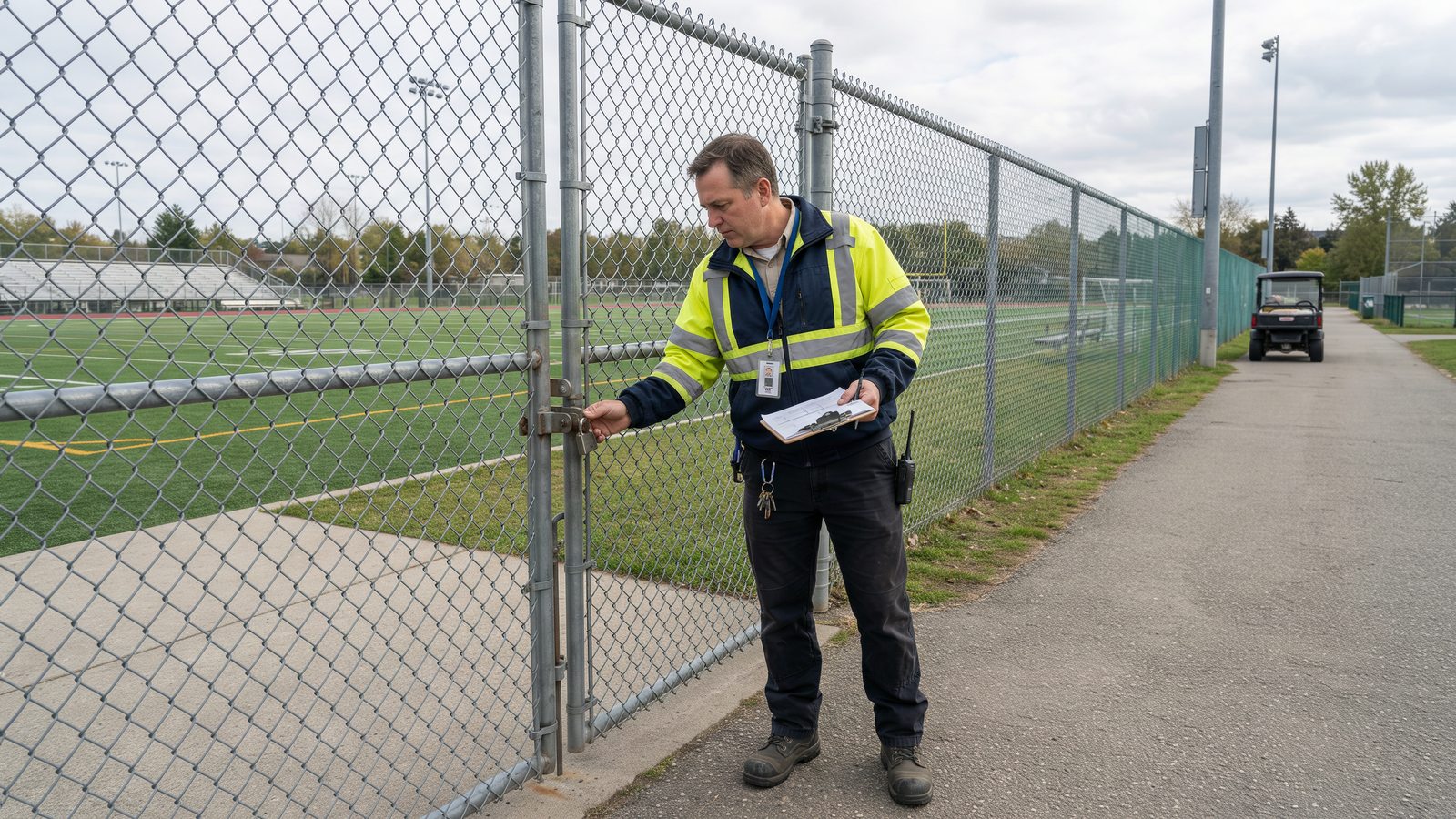
Coaches and athletic trainers lead the care of an athlete with heat stroke. Your part is different, and it matters just as much: help get the call made, keep the area clear and get emergency crews to the athlete without delay. None of that works if you learn the plan on the day it is needed.
Know the plan before the season starts
- Ask your athletic director or athletic trainer for a copy of the school's emergency action plan, and read the heat section.
- Find out where the cooling tub sits at each practice field and at the stadium on game nights.
- Learn who leads the response on site and how they will reach you: radio channel, phone number or both.
- Join the preseason venue walkthrough so you see the fields, gates and ambulance routes with the staff who will use them.
Gates, keys and the ambulance route
Locked gates and blocked lanes are some of the easiest delays to fix ahead of time. You are often the person who can fix them.
- Know which gate an ambulance should use for each field, and make sure it can be opened quickly during practices, not only on game nights.
- Know who carries the keys or codes after school hours, on weekends and in the summer.
- Keep the emergency lane clear of parked cars, buses and equipment carts.
- Make sure the field address and the gate to use are written into the plan, so whoever calls 911 can give them clearly.
The emergency steps everyone on campus should know
Exertional heat stroke is 100% survivable when cooling starts fast, on site. You may not be the one at the tub, but you can keep anything from slowing it down. Everyone who works around athletes should know that the right response is to:
- Call 911 and cool at the same time. One person calls while others start cooling.
- Start cooling within 10 minutes. Cold water with ice agitation, with the goal of about 102°F within 30 minutes. At 104°F the body loses its ability to regulate its own temperature.
- Cool first, transport second.
- Gear: take off whatever gear comes off quickly but never delay cooling for gear removal.
Cool first, transport second can look wrong to anyone trained to get people to the hospital fast. In heat stroke, the athlete is cooled on site first because that is what saves the life. If you arrive and see staff cooling an athlete in a tub, the most helpful thing you can do is protect that work, not move the athlete.
Your jobs during a heat emergency
- Confirm that 911 has been called, or make the call if no one has.
- Radio ahead and open the right gate so the ambulance can drive straight to the field.
- Send someone to meet the ambulance and walk the crew to the athlete.
- Keep teammates, parents and onlookers back so staff have room to work around the tub.
- Help bring more ice, water or towels if the staff ask for them.
Our page for EMS and first responders covers what the arriving crew will expect to find, so the two plans line up.
Game nights and big crowds
- On game nights, know where the cooling tub is for both teams and where the ambulance is parked, if one is on site.
- Plan how emergency crews will get through a full parking lot and a crowded gate area.
- Work with the event staff and game officials so everyone knows who calls for help and who clears the way.
- Remember that fans, band members and cheerleaders can get sick in the heat too, not only players.
After it is over
Write down what happened at the gates and in the lane: what worked, what slowed anyone down and what needs fixing. Bring those notes to the end-of-season heat review. Our page on what to do after a heat emergency covers the days that follow.
A quick check for school resource officers and campus security
- Have I read the heat section of the school's emergency action plan?
- Do I know where the cooling tub is at every practice field and at the stadium?
- Do I know which gate the ambulance uses, and can it be opened quickly at any hour?
- Do I know who leads the response and how they will reach me?
- Do I know my jobs if an athlete goes down?
- Do I know the emergency steps without looking them up?
Where to go next
Share this page with your school's heat safety lead and ask to join the preseason staff heat meeting. Our pages for principals and facility and grounds managers cover the people you will plan with most. For questions about the Council, contact us.
Take the next step: build your heat emergency action plan with the free National Stay Cool Day heat safety tools, then sign up your school for National Stay Cool Day on April 8, 2027. Both are free.