Player Safety Council / Athletics office staff
Athletics office staff
For Athletics Office and Front Office Staff: Your Part in the Heat Plan From the Desk
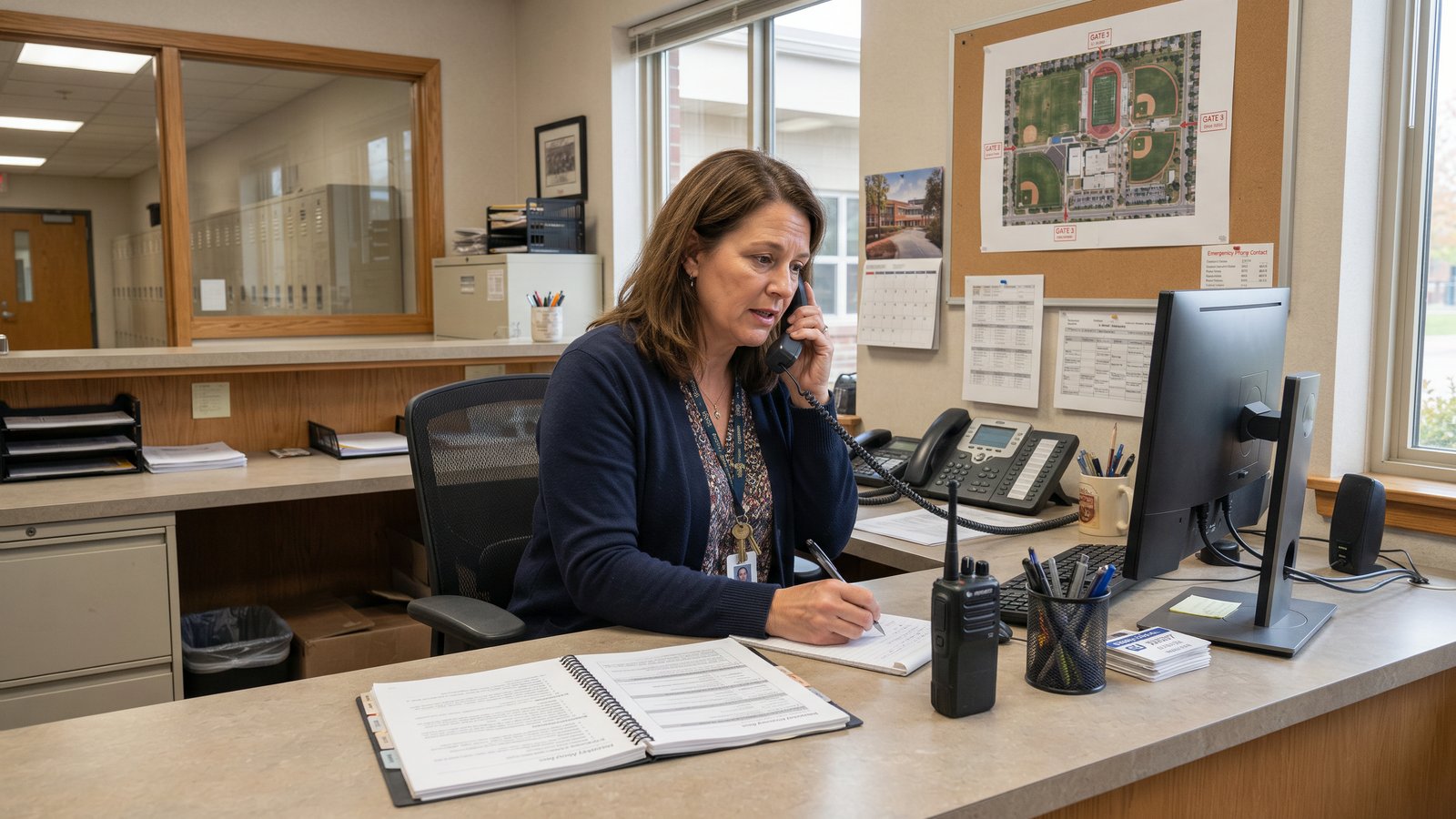
Coaches and athletic trainers lead the care of an athlete with heat stroke. Your part is different, and it matters just as much: make sure the right information is in the right hands, help the call for help go smoothly and keep families informed the way the plan says. Most of that work happens weeks before anyone needs it.
Keep the information the team will need
- Make sure every athlete's emergency contact information is current and that coaches can reach it at practice, not only when the office is open.
- Check that the street address of every practice field, gym and game site is written into the emergency action plan, along with the gate an ambulance should use.
- Keep a short call list with the athletic director, athletic trainer, principal and your school's heat safety lead, and update it whenever someone new joins or leaves. Our page on when staff changes explains why this list goes out of date so quickly.
- Know where the practice schedule lives and which staff member is at which field on a given afternoon.
The emergency steps everyone on campus should know
Exertional heat stroke is 100% survivable when cooling starts fast, on site. You will probably not be at the field, but you may be the voice on the phone when someone there needs help. Everyone who works around athletes should know that the right response is to:
- Call 911 and cool at the same time. One person calls while others start cooling.
- Start cooling within 10 minutes. Cold water with ice agitation, with the goal of about 102°F within 30 minutes. At 104°F the body loses its ability to regulate its own temperature.
- Cool first, transport second.
- Gear: take off whatever gear comes off quickly but never delay cooling for gear removal.
Knowing these steps helps you on the phone. If a coach calls the office about an athlete down in the heat, you can remind them to keep cooling while help is on the way, instead of waiting for the ambulance to start.
When a call comes in from the field
- Ask first whether 911 has been called. If not, call or make sure someone does, and stay on the line if you are asked.
- Give the field address and the gate to use, exactly as they are written in the plan.
- Reach the athletic director, the principal and anyone else the plan names, in the order the plan lists them.
- If the plan asks for it, send someone to meet the ambulance and walk the crew to the athlete. Your school resource officer or grounds staff may already have this job.
- Contact the family the way the plan says, through the person the plan names for that call.
Families, callers and the information you share
After an emergency, the phones get busy. Parents of other athletes want to know their child is safe, and people in the community hear things quickly. Agree ahead of time on who speaks for the school and what the office can say. Our page on who tells whom walks through a communication plan you can use. Until that person has spoken, keep the athlete's name and details private and pass outside questions along.
Hot days, after hours and summer
Many of the hottest practices happen in the late afternoon, on weekends and in the summer, when the office is closed. The plan has to work without you at your desk.
- Send coaches out with printed or saved copies of the emergency contacts and the field addresses for every site they use.
- When practices move or change times on a hot day, help get the update to families and staff quickly.
- If your families speak more than one language, our page on heat safety in every language has ideas for getting the message to everyone.
Keep the records
The office is often where the paperwork ends up. Keep the signed emergency action plan, the daily heat log and any notes written after an emergency together and easy to find. Those records feed the end-of-season heat review, and our page on what to do after a heat emergency covers the days that follow one.
A quick check for athletics office and front office staff
- Can coaches reach every athlete's emergency contacts at practice, at any hour?
- Is the street address and ambulance gate for every field written into the plan?
- Is our call list current, with every name and number checked this season?
- Do I know who the plan names to contact families and to speak for the school?
- Do I know what to ask and say if a coach calls about an athlete down?
- Do I know the emergency steps without looking them up?
Where to go next
Share this page with your athletic director and ask to join the preseason staff heat meeting, so the office is part of the plan from the start. Our page for principals covers the person you will plan with most. For questions about the Council, contact us.
Take the next step: build your heat emergency action plan with the free National Stay Cool Day heat safety tools, then sign up your school for National Stay Cool Day on April 8, 2027. Both are free.