Player Safety Council / School business officials
School business officials
For School Business Officials: Budgeting and Buying for the Heat Plan Before Summer
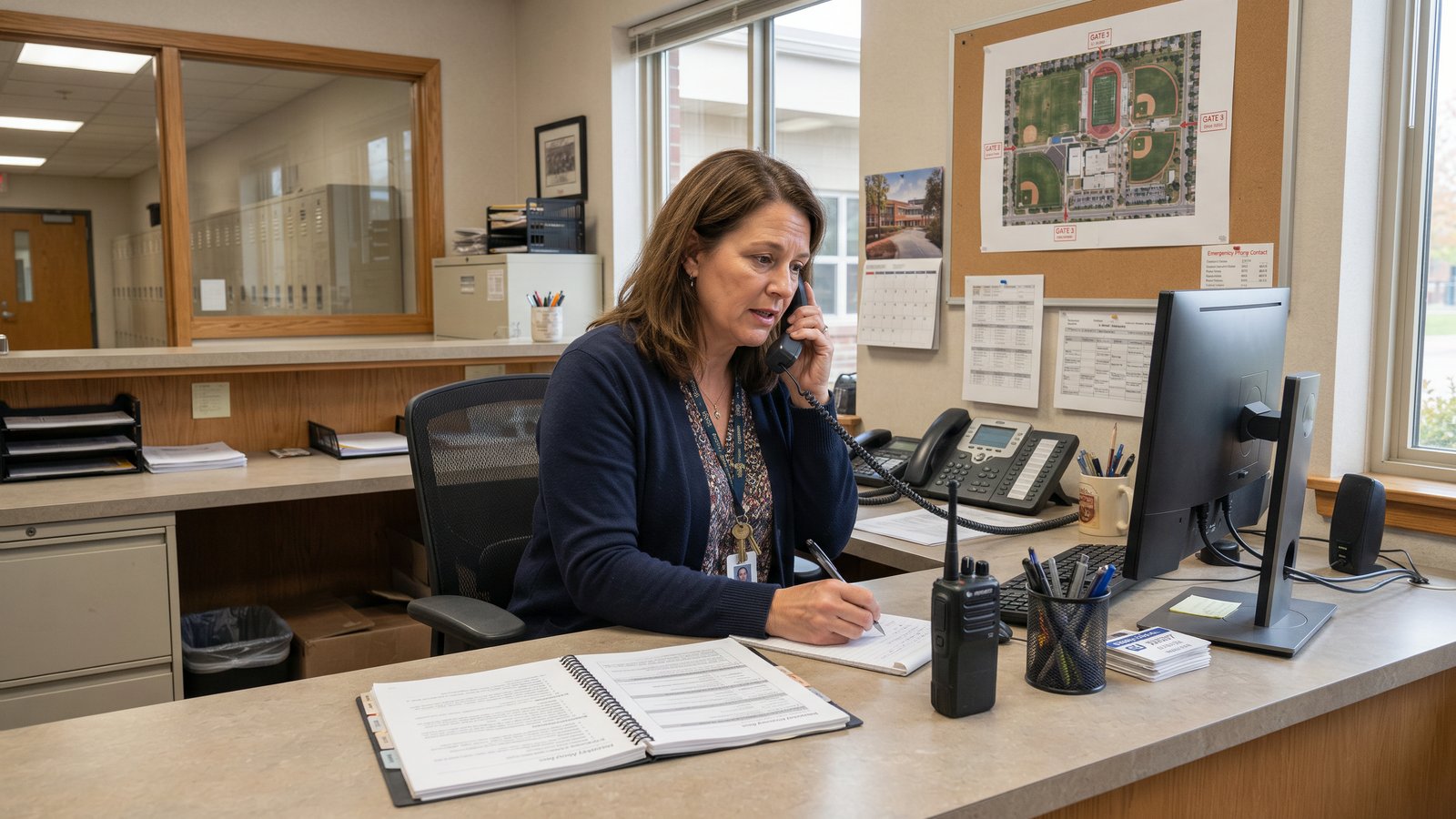
You do not need to know how to treat heat stroke. Your coaches, athletic trainers and heat safety lead decide what the plan needs. Your job is to make sure the money, the orders and the paperwork are in place so the equipment is at the field when the season starts.
Know what the plan is paying for
The cooling plan only works if the right things are on site every day. Exertional heat stroke is 100% survivable when cooling starts fast, on site. This is the plan your purchases support:
- Call 911 and cool at the same time. One person calls while others start cooling.
- Start cooling within 10 minutes. Cold water with ice agitation, with the goal of about 102°F within 30 minutes. At 104°F the body loses its ability to regulate its own temperature.
- Cool first, transport second.
- Gear: take off whatever gear comes off quickly but never delay cooling for gear removal.
Every step depends on supplies being there before anyone needs them: a tub, water to fill it, enough ice, towels, shade and a working phone or radio. Our page for equipment managers walks through what belongs at each practice site. Ask your athletic trainer or heat safety lead for the list your program actually uses, and buy from that list.
Give the heat plan its own budget line
When cooling supplies are folded into a general athletics or supplies line, they are easy to cut or forget. A separate line, even a small one, makes it clear that the heat plan is a standing cost and not a one-time purchase. It also makes it easier to answer questions from your athletic director, your principal or your board about where the money goes.
- One-time items: cooling tubs, shade tents, carts and hoses that last more than one season.
- Recurring items: ice, towels, drinking water and anything that wears out or gets used up.
- Replacement: a plan for repairing or replacing gear that cracks, leaks or goes missing.
Order early and plan for ice
Summer workouts and camps often start before the new budget year feels settled. Work backward from the first practice date on your heat season calendar so orders arrive in time to be set up and checked. Ice is the item most likely to run short. Decide ahead of time where it comes from, who can pick it up or receive it, and how it is paid for on a weekend or during a tournament, so no one has to wait on a signature on a hot day.
Count every site, not just the main field
A program with one cooling tub at the stadium and three practice fields across campus does not have a plan for the other three fields. Ask how many places teams practice and play at the same time, including middle school fields and summer camps, and budget so each one is covered. If outside groups use your facilities, the outside groups page covers who is expected to bring what, which affects what your school has to buy.
Keep records that outlast staff changes
Coaches and trainers move on, and the person who knew where the tubs were stored may not be there next year. Keep a simple inventory with each item, where it lives, when it was bought and who to call about it. Store it where the next person can find it. Our staff changes page explains why the plan has to survive turnover, and the heat log is a good place for practice-day notes that can inform next year's budget.
Work with the people who raise and review money
Booster clubs and parent groups often want to help with equipment. Our booster club page shows how they can support the heat plan. Your risk manager may also want to see that cooling supplies are funded and tracked. Questions about purchasing rules, bids or donated equipment belong with your district or governing body.
A quick check for business officials
- Does the heat plan have its own budget line, with recurring costs included?
- Are orders timed to arrive before summer workouts and camps begin?
- Is there a way to buy or receive ice on a weekend or tournament day?
- Is every practice and game site covered, not just the main field?
- Is there an inventory the next person can find and use?
Where to go next
Share this page with your athletic director and your superintendent, and set a date to review the heat plan budget before summer. Our heat safety resources page lists more tools. For questions about the Council, contact us.
Take the next step: build your heat emergency action plan with the free National Stay Cool Day heat safety tools, then sign up your school for National Stay Cool Day on April 8, 2027. Both are free.